



Software-defined radios

(Image: NASA)
Tuned for flexibility
Shifting radio functions from traditional fixed hardware circuits to a software-defined radio allows orbiting spacecraft to be repurposed. Ian Parker reports
As with many aspects of space technology, the field of satellite communications is experiencing rapid change. There is increasing demand for spacecraft connectivity, high-speed data transfer and secure links that traditional hardware-defined systems cannot satisfy. Software-defined radios (SDRs) however offer flexibility, adaptability and cost-effectiveness through prolonging satellite missions.
Whereas conventional satellite radios have fixed hardware components to handle signals, SDRs use software to control functionality. This means that the same hardware platform can be reconfigured to handle different waveforms, frequencies and protocols simply by updating the software. For spacecraft, where launches are expensive and payloads are expected to last for many years, this ability to reconfigure a system after deployment is a huge advantage.
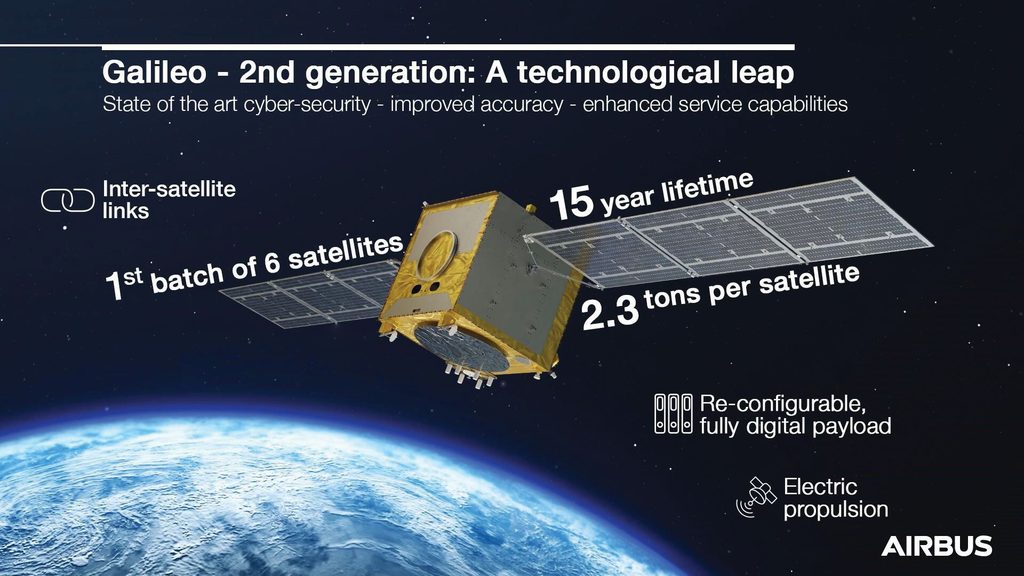
(Image: Airbus)
The SDR concept was first formally articulated by Joe Mitola III in a 1991 paper for the US Department of Defense. His vision was a single reconfigurable hardware platform capable of implementing any radio standard in software. More than three decades later, that vision is a commercial reality aboard satellites in orbit. SDRs are used in ground and air applications too, but it is the inaccessibility of orbiting satellites that makes SDR applications such a key technology on spacecraft.
At its core, the idea behind the SDR is simple: shift as many radio functions as possible from fixed hardware into software-controlled processing. In a traditional radio, the functions that define its operation, such as modulation, demodulation, filtering, frequency selection and encoding, are implemented in dedicated analogue or digital circuits. Changing any of these requires a physical change of the hardware. An SDR replaces most of these fixed circuits with a general-purpose digital processing platform, on which the radio’s behaviour is defined by programmable software called a waveform.
Today’s satellite missions are becoming increasingly multipurpose. A single satellite might be designed to perform Earth observation, provide defence communications and support broadband connectivity, and an SDR enables all these functions by allowing the same radio hardware to run multiple protocols and adapt to different mission profiles. Importantly, SDRs reduce the risk of technological obsolescence – a critical factor in missions designed to operate for 10–15 years or more – in an environment where spectrum demands shift, international regulations evolve and emerging technologies such as 5G non-terrestrial networks and direct-to-device satellite services create new challenges and opportunities.
For long-lived missions, SDR technology offers noteworthy advantages such as future-proofing against spectrum reallocation, rapid response to unforeseen interference or cyber threats, support for new protocols as standards evolve, and reduced operational risk by keeping payloads relevant without requiring hardware changes.
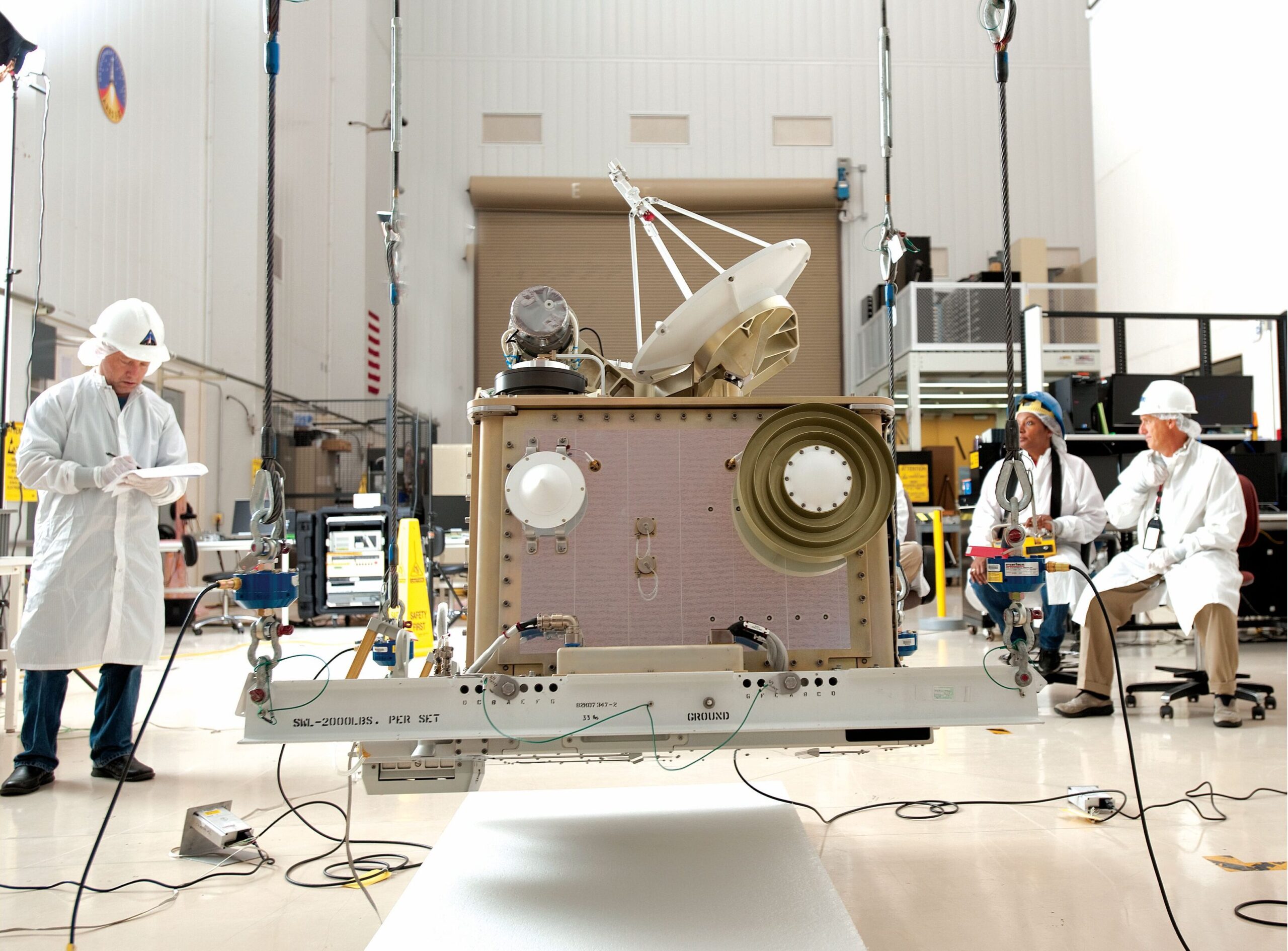
(Image: NASA)
Mission adaptability
The small satellite sector has undergone great change over the past decade. CubeSats and microsats, once thought of only as academic tools, have evolved into operational assets that include commercial constellations, defence missions and advanced scientific programmes. SDR technology has emerged as one of the most critical enablers of this evolution, providing the flexibility, spectral agility and processing capability that modern space missions demand.
CubeSats and microsats offer high capability, low mass and rapid development cycles. When incorporating SDR technology, they represent a high-performance alternative system that combines reconfigurability, reduced hardware complexity and mission adaptability into a single platform. For teams building systems where every gram, watt and cubic centimetre matters, this shift is transformative. Operators can deploy multimode radios, modify waveforms via software uploads, adjust bandwidth allocation depending on the mission phase and adapt link budgets dynamically as orbital or operational conditions require.
Spectrum pressure is no longer confined to GEO operators or traditional LEO platforms. With thousands of new spacecraft entering orbit, CubeSat and microsat missions must contend with cross-constellation interference, dynamic spectrum sharing, regional allocation constraints and compliance with International Telecommunication Union coordination. SDRs provide the level of frequency agility needed to operate effectively in this environment because operators can shift bands when required, modify channelisation, or employ advanced interference mitigation techniques such as adaptive filtering or cognitive radio algorithms. Crucially, these changes can be made without redesigning or replacing hardware.
Modern Earth observation missions generate increasingly large volumes of data and often rely on flexible sensing modes that demand adaptable communications. These missions can be accomplished because SDRs support enabling of higher-order modulations for increased downlink capacity, switching between high-data-rate and low-latency telemetry modes, and optimising links based on ground station visibility or regional regulatory constraints. They also allow operators to introduce new compression, encoding or routing techniques throughout a mission, which is essential as data requirements evolve.
Internet of Things (IoT) satellites require low-power, narrowband and highly efficient communications across globally inconsistent regulatory environments. These requirements can be met by SDR platforms by supporting multiple IoT protocols such as LoRa, LTE-M, NB-IoT and bespoke waveforms. They also enable operators to optimise power usage for energy-limited spacecraft and reconfigure communication standards as terrestrial IoT ecosystems change. This adaptability ensures that IoT-focused satellites remain compatible and effective throughout their operational life.
The efficiency and long-term viability of constellations depend heavily on maintaining interoperability across spacecraft generations while containing cost and complexity. By harmonising waveforms and routing behaviour across different satellite builds, SDR technology allows operators to update network functions as constellation topologies evolve and supports inter-satellite links using emerging or evolving protocols. These systems can even adopt new mesh routing or inter-satellite communication techniques without requiring hardware changes. This is invaluable for operators building constellations that evolve incrementally.
Terma on SDR
Alexander Spaniol, an RF engineer at Terma, says: “We try to get as much as possible into software to get all the benefits from there and try to rely as little as possible on the actual hardware itself.” Instead of requiring specialised hardware components for each function, such as modulators, demodulators, frequency mixers and signal processors, SDR systems capture the raw radio signal and perform these operations digitally. “With SDR, you can change it like you want to,” explains Spaniol. “Different modulation schemes have different advantages and disadvantages. So, you always have to deep-dive into your specific application to find the best for you.”
While SDR technology offers numerous advantages, it also presents unique challenges. Compared with traditional hardware, digital systems react differently to radiation and require new approaches to ensure reliability in the harsh environment of space. “It’s fairly easy for the strong radiation in space to flick a zero to a one, and surely easier than changing anything in a traditional hardware system,” Spaniol adds.
To resolve this, extensive testing and development is needed, and even so, the solution most often involves redundancy with multiple SDR systems operating in parallel to ensure continuous communication even if one system is compromised.
Relying on software rather than hardware also introduces cybersecurity as another critical consideration. As more communication functions move to software, protecting these systems from unauthorised access becomes paramount.
“If someone hacks into your system, then you will have a big problem because they can easily hijack your satellite,” says Spaniol. “The systems must be secure by design, and must be updated with security patches and updates when vulnerabilities are discovered.” Satellite communications should be considered a part of the critical infrastructure of a country or a company and hence the cybersecurity measures must perform accordingly.
GSaaS on the ground
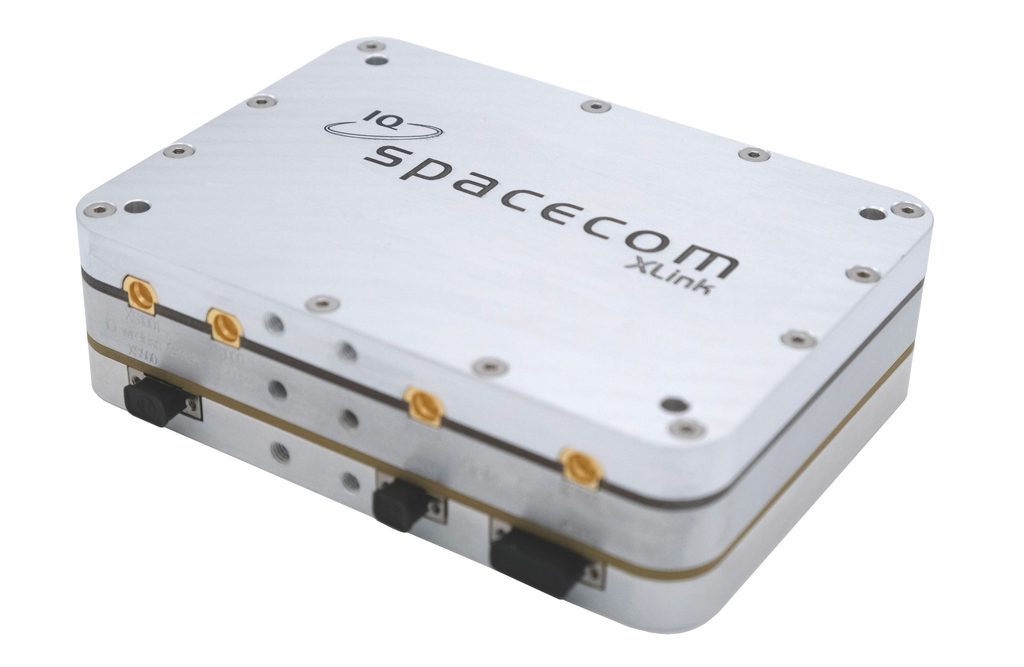
(Image: IQ Spacecomm)
Perhaps one of the most revolutionary aspects of SDR technology is its role in enabling virtualised ground station operations. Traditionally, ground stations required extensive physical infrastructure and constant on-site personnel. Now, with virtualisation, the software stack – including digital signal processing and mission control – can run in the cloud or on edge servers, paving the way for Ground Station-as-a-Service (GSaaS) models. This shift has profound implications for space mission operations because GSaaS capabilities can be orchestrated, scaled and accessed from anywhere over secure, low-latency networks – enabling 24/7 monitoring without need for a permanent physical presence. More importantly, multiple organisations can share the same digitised infrastructure, significantly lowering operational costs and reducing entry barriers for emerging space players.
The democratising effect of these technologies is already visible in the educational sector. As Andreas Stren from the University of Applied Sciences Wiener Neustadt (Austria) says: “For our mission, we cannot operate our ground station 24/7 with manpower. So, we use this new technology to be able to access it from anywhere, anytime.”
The system in detail
The RF front-end is the analogue entry point. It receives the incoming signal, performs initial conditioning such as filtering, amplification and frequency selection, then prepares it for digitisation. In modern SDR architectures, this stage is not fixed but designed to be tunable and configurable, adapting to the frequency band, bandwidth and dynamic range of the application.

This tunability can be achieved in different ways: through a software-defined mixer that shifts the signal from a varying frequency to a reference band, or through a wideband analogue front-end that digitises a broad spectrum and lets software select the desired frequency range. On the transmit side, the RF front-end performs the inverse function, converting digital signals back to the required RF frequency.
While it remains an analogue subsystem, its behaviour is largely controlled and configured through software, enabling a high degree of flexibility within the limits of the hardware design. Additional analogue components such as a low-noise amplifier, a power amplifier or bandpass filters can be placed upstream or downstream of an SDR’s front-end to improve signal quality or reject unwanted interference. These components complement the SDR but are distinct from it.
The analogue-to-digital converter (ADC) and digital-to-analogue converter (DAC) are where the analogue and digital worlds meet. On the receive path, the ADC samples the incoming analogue signal and converts it into a stream of digital data. On the transmit path, the DAC performs the reverse. The performance of these converters, particularly their sampling rate, resolution and dynamic range, directly impacts the achievable bandwidth, sensitivity and overall signal fidelity of the SDR. As a result, they are key architectural elements that strongly influence the system’s capabilities in any SDR design.
The digital processing core
The digital processing core is where the core radio functionality happens. Depending on the platform, this is typically performed using a Field-Programmable Gate Array (FPGA), a digital signal processor, a general-purpose processor or, increasingly, a System-on-Chip (SoC) that integrates several of these elements.
Within this digital domain, functions such as digital filtering, frequency translation, demodulation, decoding and higher-layer protocol processing are implemented. While the most time-critical operations are executed in programmable logic (on the FPGA), higher-level processing and control are handled by embedded software. This architecture enables the signal processing chain to be reconfigured and updated throughout the mission, including after launch, allowing the system to adapt to evolving requirements or operational conditions.
The waveform
The waveform is the radio’s identity in software. It encompasses all the key functions that determine how signals are transmitted and received: the modulation scheme, channel coding, frequency plan, timing, error correction and many other parameters. On a conventional radio, these functions are implemented in fixed hardware. On an SDR, the waveform is a software module that can be loaded, swapped and updated. Crucially, different waveforms can coexist on the same hardware platform and new ones can be uploaded while in orbit.
NASA’s SCaN Testbed, which operated aboard the International Space Station from 2012, provided a concrete demonstration of SDR capability. Over its seven years of operation, it logged more than 4000 hours of space-based SDR experiments and successfully completed 888 in-orbit reconfiguration routines, each representing a modification to the radio’s software behaviour with no physical access to the hardware.
Modern SDR platforms can support multiple concurrent signal processing chains operating at different frequencies. Some commercial SDR architectures support as many as 16 independent chains at once. Each chain can be assigned to a different application: telemetry, tracking and command (TT&C), payload data downlinks, inter-satellite links, navigation signal reception or Earth observation, all from the same unit.
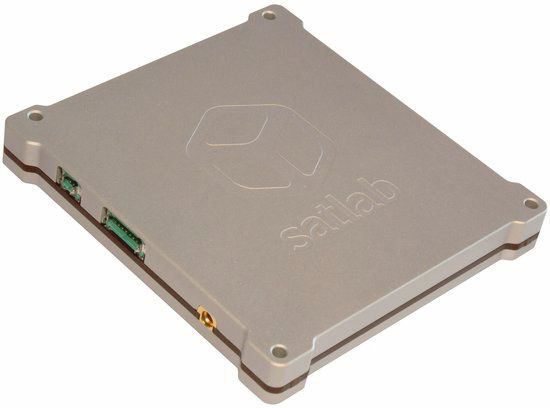
(Image: Satlab)
Satellite development programmes benefit from SDRs in ways that extend beyond an individual spacecraft. When the same SDR hardware platform can be reused across multiple missions with different software configurations, non-recurring engineering costs – the expensive work of designing and qualifying new hardware from scratch – are spread across a larger fleet. That efficiency is a key factor behind the growing adoption of software-defined payload architectures. The market for software-defined satellites was valued at roughly $3.1 billion in 2024 and is projected to reach nearly $5.9 billion by 2029, reflecting sustained investment in the flexible payload architectures that SDRs enable.
L3Harris (formerly Harris Corporation) has developed a commercial SDR platform from technology originally demonstrated on the NASA SCaN Testbed. That platform, branded AppSTAR, has since been deployed on more than 250 space radios, including hosted payloads on the Iridium NEXT constellation, where it simultaneously supports aircraft tracking and maritime ship-monitoring services from the same radio hardware.

Additionally, L3Harris has developed the Rapidly Adaptable Standards-compliant Open Radio (RASOR) chassis to deliver a premier open-architecture foundation for hybrid SATCOM capability. Designed to host waveform modules, software and third-party applications and hardware, RASOR enables a holistic hybrid SATCOM terminal that can be rapidly configured to meet evolving mission needs. The RASOR family of terminals takes a modular, open-systems approach that seamlessly hosts third-party hardware modules and software applications. For military operators, this means the flexibility to integrate new capabilities as mission requirements shift. For industry partners, it represents a sustainable, cost-effective model that eliminates vendor lock and bridges the gap between commercial innovation and military necessity.

(Image: L3Harris)
With NSA Type 1 certification expected early in 2027, RASOR supports mission-critical data transmission across military and commercial infrastructure to meet the most rigorous standards for protection and integrity. Its open architecture enables seamless integration into existing systems and deployment across a wide array of joint force platforms. Pathway diversity, multi-orbit resilience and open architecture form the foundation of the joint force’s communications future. Data wins wars and the warfighter who can move it, protect it and act on it first holds the decisive advantage.
Use-case flexibility
While SDRs appear across a wide range of space applications, their exact role depends on the mission, but several common recurring use-cases illustrate how SDR platforms enable flexible and multifunctional payload architectures.

The baseline function of any satellite radio is TT&C. SDR-based TT&C subsystems can be updated to support new ground station protocols or frequency plans without requiring a hardware change. This proves particularly useful as ground infrastructure evolves over a mission’s lifetime.
Earth observation, remote sensing and science-oriented missions generate large volumes of data that must reach the ground efficiently. The ability of an SDR to enable implementation of higher-order modulation schemes and adaptive coding allows payload data downlinks to be optimised based on channel conditions.
In terms of navigation signal reception, GNSS receivers are increasingly implemented as SDR-based functions, allowing satellites to process GPS, Galileo, GLONASS or BeiDou signals – or combinations of them – on a shared platform. The first in-orbit use of the Galileo E5A navigation signal, demonstrated by NASA’s SCaN Testbed SDR in 2018, illustrated the flexibility of SDRs to support signals and applications that were not part of the original mission design. This was possible only because the radio’s behaviour was defined in software, not fixed in hardware.
As LEO constellations grow, satellites increasingly need to communicate with each other directly rather than routing all communications via ground stations. The flexibility that SDRs provide to implement and evolve inter-satellite link protocols is a huge advantage as constellation architectures change over time.
Satellites supporting IoT connectivity must interface with a fragmented landscape of standards. Protocols such as LoRa, NB-IoT, LTE-M and others all coexist in the terrestrial IoT ecosystem, and SDR-based platforms allow operators to support multiple protocols simultaneously and, crucially, to add or update support as standards evolve.
These use-cases were also among the earliest to be implemented in SDRs, in part because they imposed comparatively modest demands on processing power and RF front-end performance, which explains why they remain the most widespread today. As SDR processing capacity and RF performance continue to improve, a new generation of more demanding applications is coming within reach. Spectrum monitoring payloads, for instance, require wideband RF channels capable of observing large swaths of spectrum at once.
Below are a few examples among the growing range of existing and emerging use-cases for SDRs that include defence-related applications, such as jamming or spoofing detection that demand both high-performance processing platforms and highly capable RF front-ends, and radar applications for Earth observation or mapping other celestial bodies that rely on synchronised RF transmit and receive channels.
Northrop Grumman
Northrop Grumman designs and builds SDRs and reconfigurable payloads for satellite communications, positioning and multi-domain military operations. These systems use open architectures to let operators update waveforms, reconfigure networks and share data between space, air, land and sea assets. Some of the key programmes and technologies developed include the following.
The SATCOM-Enabled Freedom Radio – backed by the US Air Force Research Laboratory – is an open-architecture, cyber-secure SDR developed by Northop Grumman to connect ground and airborne units directly to space communication assets.
Additionally, to support protected MILSATCOM payloads, Northrop Grumman builds jam-resistant, software-driven communication payloads (such as legacy Milstar and the Enhanced Polar System-Recapitalization / EPS-R) hosted on satellites to provide secure high-latitude and global links.
The company has also flight-tested SDR-based military-code GPS navigation receivers that deliver resilient positioning and timing from space signals.
The foundational integrated communications, navigation and identification architecture, used across Northrop Grumman’s radio hardware and software development kits, allows rapid third-party waveform and feature upgrades.
Lockheed Martin
Lockheed Martin integrates SDRs with its SmallSat orbital architecture, enabling satellites to host high-bandwidth RF applications, reconfigure waveforms in orbit and execute app-based mission updates post-launch. Some of the key capabilities and features include the following.

High-bandwidth RF hosting supports multi-application radio frequency collection, digital signal processing and data compression, and on-orbit reprogrammability allows dynamic waveform updates and mission pivots via simple software app uploads rather than hardware swaps. Mesh networking pairs with technologies such as HiveStar software to enable adaptive inter-satellite links and shared edge processing, while the open-architecture integration leverages commercial off-the-shelf components and modular payloads – such as third-party high-data-rate transceivers – to reduce cost and development cycles.
Lockheed Martin’s self-funded Pony Express missions, used as an initial testbed for its shoebox-sized small satellites, have demonstrated rapid RF payload prototyping and space mesh networking. The Space Development Agency Transport Layer, integrated into small satellite constellations, provides tactical, software-defined connectivity (including Link-16) directly to warfighters, and 5G.MIL payloads configure space-based base stations with flexible radio access network stacks capable of on-orbit restructuring.
BAE Systems
BAE Systems’ Digital Intelligence business develops advanced SDR technologies that enable satellites to utilise radio to provide intelligence, surveillance and reconnaissance capabilities while remaining adaptable throughout their operational life. These technologies can be applied to a wide range of space-based applications for defence, security and civil customers. RF payloads incorporating enhanced SDR processing payloads can detect, monitor and analyse RF signals from space, enabling users to gain greater situational awareness and identify activities across land, sea and air domains.
The SDR architecture supports a range of functions, including secure satellite communications, RF intelligence gathering, space-to-ground links and inter-satellite communications. Combined with onboard processing and AI, the system can analyse data in orbit and transmit actionable intelligence directly to users, reducing reliance on ground-based processing and thereby improving response times. BAE Systems also leverages its expertise in digital signal processing, waveforms, antennas and secure communications to create software-defined RF payloads that can evolve alongside changing mission requirements.
Overall, BAE Systems’ satellite SDR capabilities deliver a flexible, upgradeable and secure space architecture that supports military communications, RF monitoring, electronic intelligence and multi-domain operations. The ability to reconfigure satellites after launch is a key differentiator, helping customers maintain technological relevance and operational advantage in an increasingly contested space environment.
Planet Labs
Planet Labs develops advanced radio and communication architectures – including SDR concepts, high-speed Ka-band links and inter-satellite crosslinks – for its next-generation Pelican and Tanager smallsat platforms. These flexible radio systems support hybrid space-to-ground and space-to-space connectivity, enabling rapid tasking and reduced data latency.
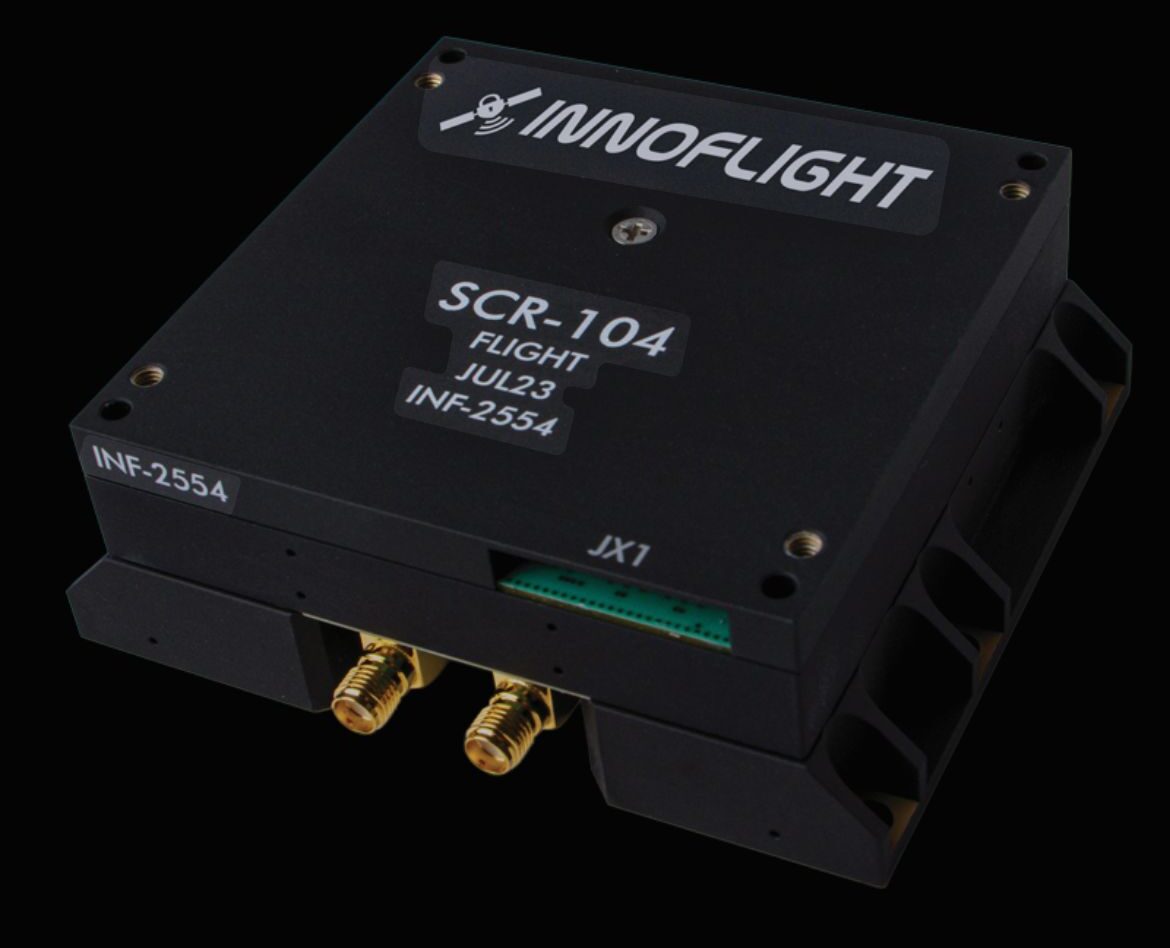
Its full SDR platform consists mainly of a SoC and FPGA module. The SoC is used primarily as an integrated circuit to hold components together, while the FPGA is a configurable module designed to help program electrical functions according to mission requirements.
(Image: Innoflight)
Summary
Xilinx is one of the most well-known SoC providers and their products, such as the Zynq UltraScale+, are used widely in the space industry. Other companies providing SoC/FPGA products and services in the space industry include Microsemi, Analog Devices and NanoXplore. Modern space systems can require significant processing resources. To meet such requirements in an efficient manner, SoCs enable satellite manufacturers to reduce the overall hardware expense and access higher processing power in a less complex manner.
Projects are also underway to further reduce the size and operating power of SDR systems through use of more powerful electronics, innovative materials and more advanced system set-ups. For example, a customisable SoC and FPGA could give greater flexibility to customers so that they can choose product configurations better suited to their mission requirements.
This is an era of unprecedented flexibility in space missions heralded by the replacement of rigid, hardware-based RF circuits with programmable digital signal processing enabled by SDRs. The current trends of dynamic in-orbit reconfiguration to meet changing regional coverage needs or mitigate spectrum interference are reflected in the exponential growth of LEO smallsat and CubeSat constellations, but also in accelerated integration of next-generation space infrastructure.
UPCOMING EVENTS