



OhmSpace STAR-Water-nano resistojet
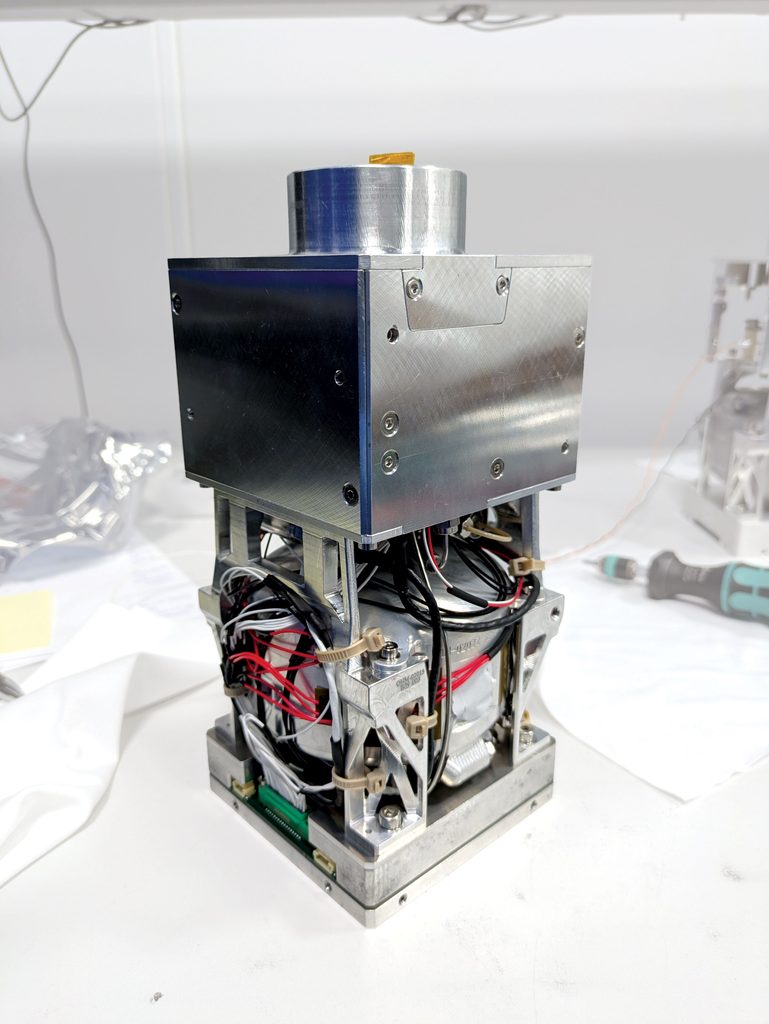
(All images: OhmSpace Group)
Jet printing
Additive manufacturing, careful material selections and key design innovations enable this high-temperature resistojet’s strong performance and efficiency, as well as its low cost and modularity. Rory Jackson investigates
Simplicity is a treasured goal across virtually all schools of engineering, the general principles of simpler systems being that they are less prone to failure, less costly to maintain and produce, and easier to understand, improve and scale than more complex systems.
But, as many engineers have commented to us over the years, it is often hard to engineer simplicity. Enhancing a simple system’s performance or size-, weight- and power-optimisation by introducing more complexity is straightforward; reverting the result back into simplicity, far less so.
It helps to begin with a simple enough system, and resistojets are an appealing solution for spacecraft propulsion in that respect. These are electrothermal thrusters, in which an electrically powered heating element – invariably a resistor, hence their name – heats a propellant, thereby expanding it through a nozzle to achieve high exhaust velocity. The higher the temperature, the higher the exhaust velocity (or specific impulse, Isp), hence the propellant efficiency.
With practically no moving mechanical parts other than propellant valves, they stand to represent a more simple and reliable approach to orbital propulsion than methods using significant machinery (like Hall-effect or ion thrust engines). Resistojets notably resemble traditional cold gas thrusters in most respects – except the former will typically produce two-to-four times the Isp of an equivalent cold gas thruster thanks to employing a resistor for the added thermal energy.
Overall, these properties place resistojets in high demand for small satellites where power efficiency bears tight optimisation. However, historically, they have lost out to competing thruster technologies that are capable of greater Isp. A major operative limitation is the thermal limits of the materials in resistojets (particularly given the hot, harsh internal environment that resistojet operation creates), without which the gaseous propellant could be heated more, and the thruster’s performance and efficiency consequently enhanced. The molecular weight of the gaseous propellants used by resistojets also traditionally poses an efficiency disadvantage compared with Hall-effect, ion and some other thrusters.
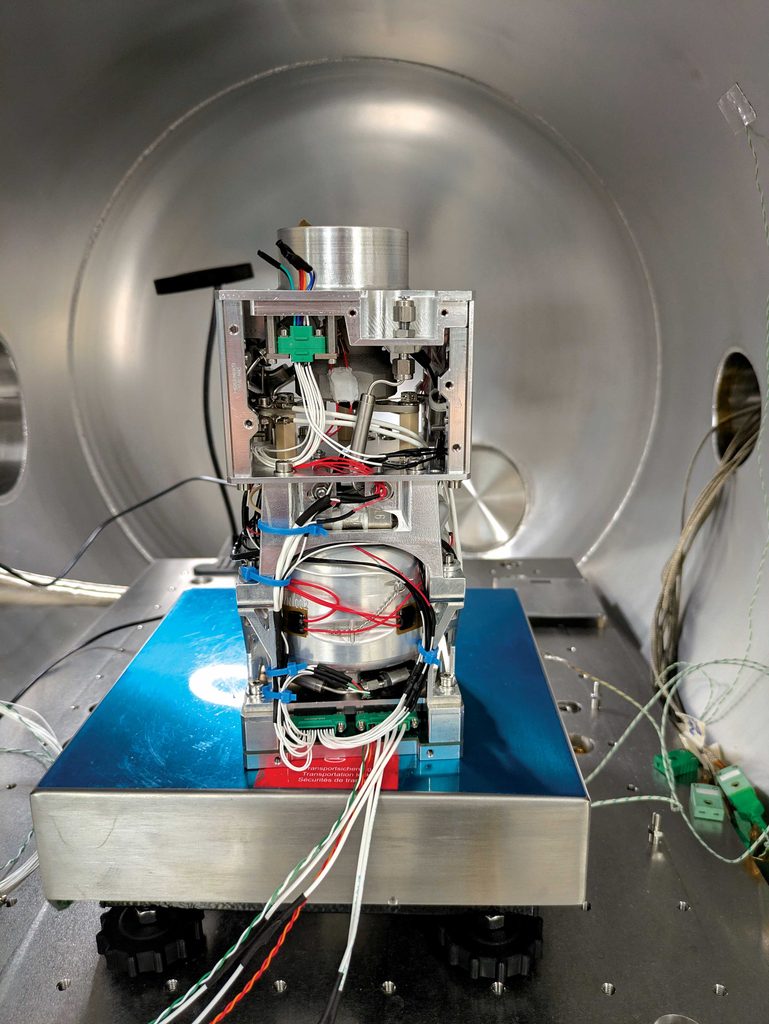
Additive manufacturing (AM) was proposed as a potential solution for these and other limitations of resistojets just over a decade ago, by Dr Federico Romei at the University of Southampton (UoS) in the UK. As Dr Romei (now founder and CEO of Anglo–Italian orbital technology supplier OhmSpace) understood, AM could enable use of advanced metal alloys in the complex structures of a resistojet in an entirely new way, which could circumvent what would otherwise be an extremely complex and costly assembly of such metal parts – effectively condensing hundreds of steps into one or two.
Even more important than these cost- and production-efficiency gains, were the proposed Isp gains achieved by raising the propellant’s stagnation temperature through employment of more thermally optimal metals, from heater to housing.
By leveraging the advancements in AM technology since then, Romei and the Rome-headquartered OhmSpace Group have been able to develop, validate and now productionise high-temperature resistojets capable of operating on greatly reduced fuel quantities relative to mission durations, including use of water as a propellant (being the chemically safest, most widely available compound on Earth and across the solar system and therefore most efficient choice of propellant) without the typical performance disadvantages that water would entail.
Their simplicity and low cost also enable high volume production and delivery, starting with their first product to market, the STAR-Water-nano in its first generation. While the water capacity can be scaled and customised into various form factors as needed, as standard the solution is sized from 2U, with a CubeSat form factor measuring 198.5 mm by
96 mm by 96 mm, plus an additional |23 mm tall, 37 mm radius cylindrical outlet nozzle section protruding from the top, which fits into the TunaCan volume present on every CubeSat deployer. The proprietary heater is sized to take up to 50 W of continuous power input, and produces up to 15 mN of thrust, with an operating Isp of just up to 175 s and impulse of 330 Ns at minimum. Its second generation, already in development in the UK and to be released towards the end of 2027, will have higher performance in a lower volume, targeting 1U plus TunaCan and an Isp of above 200 s.
As Romei explains to us, “We’re also on the cusp of validating STAR-Water-nano through two upcoming in-orbit demonstration [IOD] missions; by no means is it the sole product or technology that our company revolves around, but it’s the most mature and the best focal point to explain where we’ve come from and what we’re capable of.”
The ‘STAR’ in the thruster’s name stands for Super-high Temperature Additive Resistojet, while the ‘Water’ stems from Romei’s conviction (fostered through past participation in technical accelerator programs) that water is one of the best – if not the very best – of resistojet propellant choices, partially for Isp but especially for scaling production of small satellites, which can otherwise suffer exploding manufacturing costs if using toxic or hazardous propellants. Lastly, the ‘nano’ modifier signifies the product’s small size, having been scaled down to suit CubeSats and similarly low-footprint spacecraft, which are the company’s entry market segment.
“We do currently focus on CubeSats as a testbed carrier for our IP, as they pose the least costly and least heavily regulated route to IODs,” Romei continues.
Once OhmSpace has demonstrated its high-temperature resistojet technology in space, via the two IODs using STAR-Water-nano, its next steps will be to produce a second-generation version of the product, refined and optimised using some of the upcoming innovations explained below.
“And although CubeSats represent a very substantial market, we do feel that larger constellations could really benefit from switching to our technologies,” Romei says.
“Take, for example, Starlink satellites using Hall-effect thrusters, or others using ion thrusters: those might have us beat on sheer performance, but they’re far more complex and therefore costly to scale than resistojets in terms of active electronic components count, propellant management and thruster assembly.
“And as we take forward step changes in performance, we’ll be eroding their advantage while retaining much better economies of scale whether with STAR-Water-nano or larger thruster variations. That’s a much more important factor for organisations hoping to scale up to tens or hundreds of thousands of satellites, and since many of those satellite designs will need multiple thrusters per spacecraft, we’re working to position ourselves to produce potentially millions of units in the years to come.”
Modular design
A brief overview of the STAR-Water-nano’s architecture bears covering before unpacking its underpinning technological innovations.
The core of OhmSpace’s IP and the STAR-Water-nano is its proprietary additively-manufactured heating element (discussed in more detail henceforth), which mounts on a base featuring an electrical feedthrough that allows current to flow into said heater. While the feedthrough connects to the heater, a casing that encompasses the nozzle and thruster body couples over the base, effectively housing the heater and constituting the fully assembled thruster by way of OhmSpace’s coupling methods.
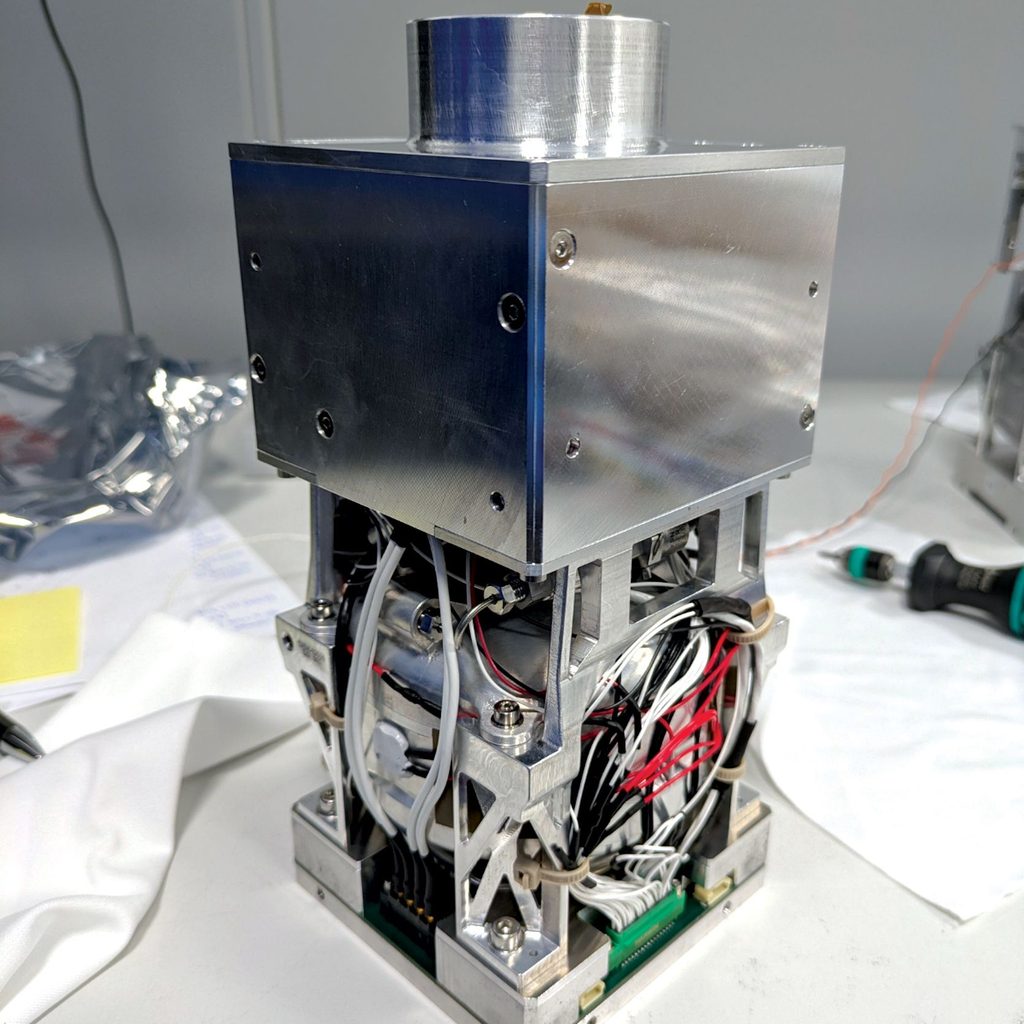
and a power control and condition unit; these can be stacked vertically or reconfigured modularly
“That nozzle is the tiny convergence point where the superheated steam, warmed up to nearly 1400 K by the heater, is accelerated and escapes to achieve thrust,” Romei comments.
While there are a few other minor components for purposes such as electrical insulation, these four components constitute the vast majority of the core resistojet. As Romei notes, the number of parts – most of which are additively printed – is small, and the system is integrated in a turnkey assembly such that the end user need not attach any separate pipes or tanks for the delivered thruster package to function.
“There’s two other modules in addition to the thruster: the propellant storage and feed systems, which are conventional and equivalent to those seen integrated on other orbital thruster systems, and then there’s the power control and conditioning unit [PCU], which is also equipped with a power input and an RS-422 serial interface for the main bus,” he explains.
“We’ve also provided interface control documents [ICDs] and our PCU with built-in firmware to our IOD partners, and those are also being delivered to some potential customers. Those specify fasteners and mounting practices for integrating STAR-Water-nano to a spacecraft’s structure, as well as electrical connectors and telemetry and command interfaces.”
As standard, the three modules stack approximately atop one another. However, the system is modularly reconfigurable, in that the PCU and the propellant tank can be moved around and reoriented relative to the thruster to suit different mounting bays and other engineering requirements on the end integrator’s platform (with the caveat that cable harnesses, wire routing approaches, propellant feeds will need to be customised appropriately).
“We especially impress upon customers that, if they have higher performance targets, for example greater total impulse needs, the propellant tank can be enlarged,” Romei says.
“That’s a simple redesign on our part, and though any customisation will take the unit price higher than the standard €130,000, we’re happy to provide customers a quote estimate and the delta for price relative to reconfigurations, so they can decide what degree of redesign would be best for them.
“We also anticipate the Gen 2 nano will be more flexibly modular, partially by having a more thoroughly defined set of standard tanks that pre-empts most redesign work needed to increase onboard propellant stores.”
AM in resistojets
As mentioned, the paramount innovation behind OhmSpace’s high-temperature resistojets is the patented electric heater at the thruster’s centre, which heats the water – or whichever propellant the operator prefers, including potentially ammonia and inert gases such as krypton and xenon – to a suitably high temperature for efficient thrust.
“We achieve this heating element through metal additive manufacturing; it’s the only method by which our patented heater architecture can be achieved, as other methods would take multiple manufacturing methods and stages to result in the single, very complex component design,” Romei explains.
Conventional resistojet approaches have typically consisted of commercial off-the-shelf (COTS) cartridge heaters housing filaments in arrangements of either helically or concentrically arranged tubes, and modified with a vacuum-tight electric feedthrough that ensures a seal between the regions inside and outside of the thruster.
At a high level, OhmSpace’s patent describes a concentric arrangement of tubes, the walls of which directly heat the propellant as it passes annularly around the heater structure. Much finer details of the heater design are alluded to, and direct control over those physical features is critical to how current flow and heat production are managed in the STAR-Water thrusters.
“In any case, additive printing is what’s enabled this complex architecture, and to that end we’ve chosen to bring the metal AM process we use, namely laser powder bed fusion [LPBF], in-house because the more we can control that process, the faster we can iterate the heating element design to further optimise the thruster’s performance,” Romei explains.
“The patent is, obviously, quite broad, and it’s through our proprietary know-how that we can tweak the design to optimise performance and other characteristics to suit specific applications.”
Unlike conventional resistojet resistor assemblies, OhmSpace’s is an all-metal part, with its constituent tubes and other features printed as thin as possible (thanks to the nimble and intricate way LPBF melts metal members from powdered additive) to maximise electrical resistance and, hence, the efficiency with which current transitions into heat. A larger, thicker resistor would fail to achieve the necessary resistance for optimal performance, and risks being too large and heavy for CubeSats and other space-constrained platforms.

“Overall, the most compact resistor possible is ideal for achieving the target gas flow, which in our technology and for the CubeSat application is on the order of milligrams per second,” Romei says.
“That might go up to grams per second when scaled-up for higher-power spacecraft, but nonetheless, the heater would remain very small, with small sub-features to really finely manage electrical resistance – the PCU being vital for converting the battery power coming out of the spacecraft’s bus into effective resistojet control and operation.”
He adds that LPBF may be the only manufacturing technique capable of achieving the heater design with such tight tolerances for its design features, with their sub-elements being on the order of hundreds of microns in thickness (typically 200–300 μm thick at minimum). He then alludes to other techniques that might be capable of producing even thinner elements, but would suffer performance trade-offs that would mitigate any feasible resistivity gained.
“Forms of additive manufacturing using metal filament extrusion are also interesting, but they cannot achieve the precision and feature size we need at the scale of our resistor. So, LPBF is overall fantastic for what we want to achieve: the right compactness, electrical resistance, physical robustness and so on,” Romei says.
Material considerations
As of Gen 1 of the STAR-Water-nano, most components of the resistojet (certainly all those in contact with heated propellant) are printed from a nickel alloy, with two recently printed batches set for the IOD missions.
“An important differentiator of our architecture versus other resistojets, which drives our material selections, is that our heating element is in direct contact with the propellant. That means the elements of the heater are themselves submerged, if you will, in the water vapour or whatever gas the mission utilises,” Romei explains.
“As mentioned, most resistojets use COTS components to build their heaters, with those heaters’ filaments not in direct contact with the propellant – most likely, they’re embedded in a cartridge or around a drum, meaning it’s only an indirect heating they impart on the propellant.”
While it can be expedient for manufacturers to buy such cartridge heaters off the shelf, readily qualified for operations in space, their indirect heating inevitably means less efficient thermal transfer, a lower overall gas temperature and hence lower Isp in the conventional approach versus OhmSpace’s high-temperature resistojet.
“Those designs can achieve a gas temperature of maybe 500–600 °C and not more because there’s multiple material layers you have to consider: the wire sheathes, the drum and other objects that pose issues like parasitic losses and thermal expansion differentials,” Romei continues.
“So, that approach really puts a hard limit on the resistojet’s ability to increase gas temperatures and thus specific impulse and efficiency levels for the thruster – it’s unable to get more thrust out of a set amount of propellant. But we can achieve higher temperatures, thanks to our direct heating, combined with our complex geometry optimised for efficient and gradual heating of the gas as it flows at the core of the heater before being expelled through the nozzle.”
Nickel alloys were chosen for being among the most effective commercially available materials with respect to electrical characteristics and high resistance to oxidising environments such as pressurised water vapour.
“However, since noble gases don’t really react with any other materials, we can – when there’s specific applications using xenon, krypton and others –
use more exotic materials such as refractory alloys. We’ve done that in the past, and we’re now re-iterating such an approach in a geostationary application,” Romei comments.
For those unfamiliar, refractory metals are highly heat- and wear-resistant metals, typically characterised by their considerable hardness, having a melting point in excess of 2000 °C and being chemically inert. While definitions can vary, most often niobium, molybdenum, tantalum, tungsten and rhenium are considered refractory elements, those often alloyed together (as well as further elements such as titanium, hafnium and zirconium constituting minor parts) for superior performance in specific aerospace and industrial roles.
“We can’t use such solutions with water, as much as I still judge water to be the best resistojet propellant, as refractory alloys will get rapidly oxidised in heated water – but with noble gases, you don’t get that issue and can easily heat them above 2000 °C with no issue,” Romei continues.
While there are very few suppliers of refractory metal powders for AM globally, OhmSpace is already working with strategic partners with whom the company already produced and tested components.
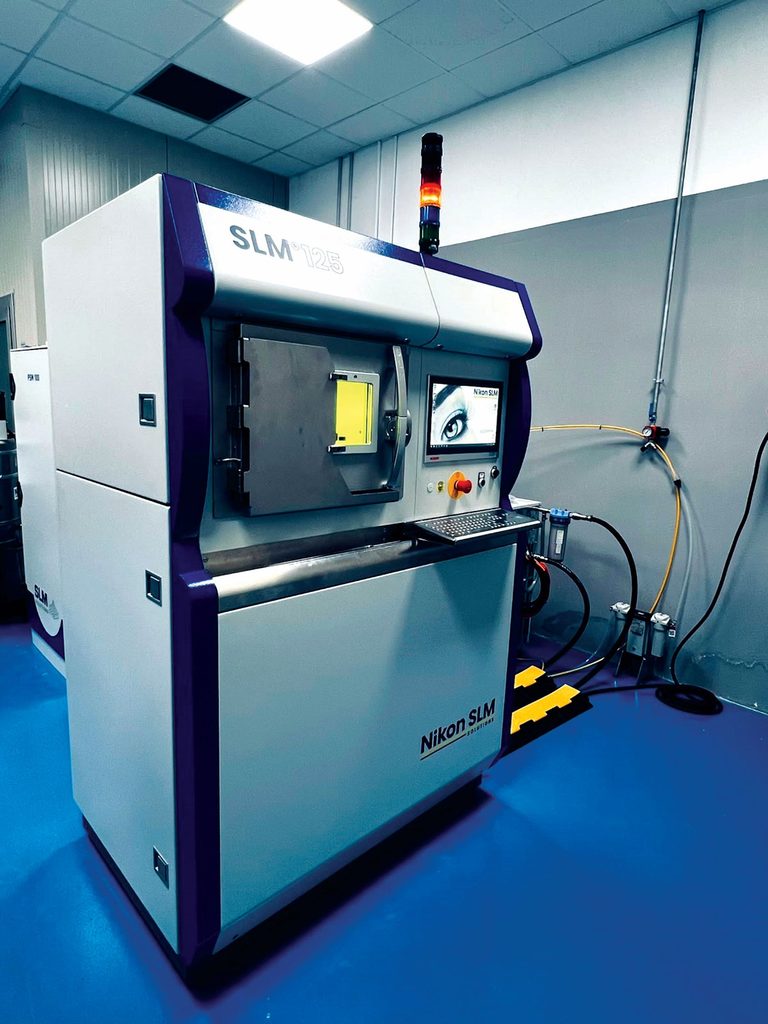
“Unquestionably, nickel alloys are great for water propellant, much better than stainless steel as we’ve found during my university years, and we can now print our own parts freely using the metal SLM 3D printer from Nikon that we’ve brought in-house,” Romei continues.
However, the company is already incorporating a new material, which is being supplied by an external strategic partner. Romei cannot yet disclose who the partner is, or the exact nature of the material because the related technology is still under development and the material in question is the partner’s proprietary IP.
“It was something they made in-house for use in their own products before agreeing to supply quantities to OhmSpace so that we can develop our own processes for additively printing parts with that material and our Nikon printer – which is not the printer they use in their internal processes – so we’ll be in a unique commercial position once we’ve developed the capability to print parts with this material,” Romei says.
“This spatial material has already been tested and validated to provide STAR-Water-nano much better specific impulse but most importantly endurance, to the point that Gen 2, which will incorporate it, will be capable of virtually indefinite throughput of propellant; that’s really a critical capability to unlock if we want to address the needs of mega constellations.”
Multi-physics modelling
The R&D needed to optimally leverage AM, advanced materials and CFD (the latter for optimising heater geometries for propellant flow characteristics) into the STAR-Water-nano’s design dates back to Romei’s PhD on high-temperature resistojets for all-electric spacecraft at UoS.
Principally, the PhD was focused on resolving the issue of resistojets (although widely used in various satellite types) being reliant on hydrazine and unable to run efficiently on noble gases or other propellants. Designs at the time exhibited moderate performance at best – a number of satellite manufacturers at the time producing resistojets with an Isp of just 48 s using xenon (a function of both the fuel choice and the resistojet design).
Hence, Romei saw considerable scope to improve upon this – potentially to 80 s with xenon or 100 s with krypton (which OhmSpace still aims for in a future product design, known presently as STAR-X) – by increasing propellant temperatures and minimising pressure drop before their expansion and ultimate expulsion from the thruster nozzle, through AM, materials science and CFD.
STAR-Water-nano’s heat exchanger in a single print, and how to maximise its operating endurance
“Already in 2014, we were looking into multi-physics modelling to approach, characterise and solve the problem of how to best exploit these new technologies in a resistojet,” Romei recounts.
“I’d published research before on validation and correlation between multi-physics simulations of gas flow heating and real-world experiments at UoS. We’ve since done similar exercises in the company and pushed them further, for instance by using such multi-physics simulations to investigate how we could improve the resistojet’s performance.”
Little enough prior art and research existed for Romei and his colleagues to draw upon for determining an ideal thruster and heater architecture, with the biggest aid being a 1966 publication by Russell J. Page, Carl R. Halbach and Robert A. Short on a 3 kW concentric, tubular resistojet.
As part of that trio’s research, they successfully ground-tested and validated a resistojet capable of an Isp of 800 s, running on hydrogen (technically the best resistojet fuel owing to it being the lightest element in existence, enabling the fastest exhaust velocities and thus the highest Isp).
“But while its heater design was fantastic, to assemble it you had to use a number of manufacturing processes that made it prohibitively difficult to produce, extremely costly and also unreliable because it would break after a certain number of cycles,” Romei explains.
“The biggest culprit behind these problems was the use of chemical vapour deposition to make the resistojet’s very thin filament tubes, which they then arranged together concentrically, and they’d have these tiny strut elements that would be welded to make an electric pathway as well as a 3D flow pathway. They achieved very good, optimised electrical and flow performances – but not reliability, so the design ended up not being launched into space.”
However, Page, Halbach and Short’s design would later serve as crucial inspiration for OhmSpace’s patent (filed via UoS in 2021) on the high-temperature resistojet technology.
Before that, however, Romei first had to contend with the rarity of metal AM printers in 2015, the ability to print a complex heater in one shot being an indispensable goal, despite some 3D printer suppliers reacting incredulously to his idea.
Although an uphill climb, subsequent R&D with metal AM technologies proved that manufacturing the “complex, thin-wall, concentric cylindrical heat exchanger” of Romei’s original PhD in a single print was very feasible. However, the same R&D seemed to suggest that the heater would still crack after a certain number of cycles, primarily owing to thermal expansions and contractions, not dissimilarly to Page, Halbach and Short’s design.
Hence, having resolved the manufacturing hurdle, Romei and his colleagues then had to solve the endurance issue. A series of prototyping and experimentation rounds followed, with papers published from 2017 to 2022 that recounted the lessons learned and innovations undertaken to resolve the heater’s short lifespan.
Of particularly conclusive help were significant redesigns to minimise rigid constraints on the inner, high-temperature heater members (and thus minimise the thermally induced mechanical stresses there), increasing structural robustness and selection of ideal materials. The final paper in 2022 discussed tests on heaters of Inconel 625, tantalum and a tantalum–tungsten alloy. While the tantalum–tungsten alloy heaters failed because of short circuits and fractures, the Inconel heaters largely exceeded 6000 cycles without breaking, and the pure tantalum heaters 10,000 – with Inconel ultimately exhibiting superior manufacturing consistency (and with 4000 cycles having been the experiment’s target, 6000 was deemed a more than sufficient MTBF).
“Having proved that the heater could be manufactured and made reliable, we steered OhmSpace Ltd – which I incorporated in 2020 – to focus on optimising the technology into a minimum viable product, that being our Gen 1 STAR-Water-nano that we’ve validated on the ground and will soon validate in space,” Romei continues.
By 2021, Romei won a grant through the UK’s Engineering and Physical Sciences Research Council, resulting in an effective first prototype of STAR-Water-nano and tests thereof. Product development was somewhat slowed thereafter in favour of commercialisation and a more comprehensive spin-out of the company from UoS, but OhmSpace Group, now headquartered in Italy, secured in December 2023 a €1.2 million investment round, followed by a €200,000 ESA contract less than six months later to de-risk the STAR-Water-nano development.
Most recently, OhmSpace received additional funding through the organisation Invitalia’s Smart&Start program, which it used to acquire the aforementioned Nikon SLM 125 metal additive printer in early 2026. The company’s printer is now located in the Competence Industry Manufacturing 4.0 in Turin specialising in AM – particularly metal AM, its use in space technologies and automation thereof – to benefit from such competencies, and the easy availability of key inputs such as argon gas for the laser sintering chamber and post-processing capabilities.
“But there’s further improvements we want to make to STAR-Water-nano beyond just printing the new, proprietary heater metal I mentioned earlier. For instance, our multi-physics simulators indicate that there’s still a delta of a few hundred degrees between the heater’s maximum structural temperature and the maximum temperature of the gas, which we’re narrowing through a redesign that carefully takes into account the specific flow rate, pressure and other imperative operating considerations,” Romei explains.
The multi-physics simulators take into account not just the fluid dynamics of the gases, but the thermodynamics across the heater channels and materials (including how the propellant’s flow and other behaviours change with resistor-induced heat and space radiation) and other parameters. Altogether, the simulations indicate that the Gen 2 heater redesign will exceed OhmSpace’s target minimum Isp of 200 s, independently of new metals or propellants.
Power conditioning & thrust management
The primary job of the PCU is to take the regulated 12 V power supply from the CubeSat, and condition that power such that it can feed the heater at a lower voltage and raised current as optimal for heating the propellant. Additional duties involve controlling propellant feed valves and governing the heater’s electrothermal behaviour.
The PCU electronics are built using a PCB-mounted field-programmable gate array (FPGA), chosen for being the simplest and thus most reliable means of governing the resistojet’s propellant feed and current flow, as well as thermal management and fault monitoring (the latter two being discussed below).
“For Gen 1 at least, we really wanted to focus our efforts in innovation on the thruster performance, and didn’t want to split focus off into the other subsystems. That meant forgoing more complex computation systems like microcontrollers to keep the PCU as simple and reliable as possible, especially since using a microcontroller would have required extensive software development,” Romei says.
Instead, the FPGA is managed through non-complex sets of command lines, specified in OhmSpace’s firmware ICD. These primarily cover straightforward requests to turn on the heater and to target a specified thrust output power, as well as a few other less-standard commands like engaging a standby mode or monitoring mode.
“Once these commands come from the spacecraft onboard computer [OBC], the system refers to the embedded mapping we’ve provided for the thruster, which ensures the valves provide the right amount of water to achieve the optimum performance for the given power,” Romei continues.
“That’s the simplest we could possibly make the firmware; there’s more sophisticated features we could implement, like closed-loop feedback systems, but we feel it’s more sensible to develop those according to specific feedback and demand from our customers.”
Romei notes that many LEO systems are leveraging COTS compute hardware, and while this holds true for STAR-Water-nano, OhmSpace selectively chooses FPGA-powered solutions with either a proven history of aerospace heritage or key specifications indicating their capacity to operate reliably in space.
“And since we started onboarding the thrusters with our IOD partners and doing early integrating with potential customers, we’ve been able to really work hard at fixing bugs and finding improvements in our PCU firmware, resulting in a PCU that’s not just been developed in-house but validated with industry-grade CubeSats,” he adds.
“We’re at Version 28 of our firmware, which should indicate how many generations of improvements we’ve now made to mature the PCU, and make it as reliable as possible for real-world operations.”
Thermal management
To comprehensively understand and validate the thermal behaviours across STAR-Water-nano, OhmSpace carried out a thermal vacuum (TVAC) testing campaign, which included running the system at -40 °C and at +60 °C for two hours each, continuously (a LEO period lasting just 90 minutes).
“We are very conservative about the peak and minimum temperatures we’ll tolerate across the resistojet system; thankfully, the thruster passed the campaign requirements, operating as it was supposed to by thrusting successfully under both cold and hot conditions,” Romei says.
“It helps that, in LEO conditions, the 90 minute orbit does alternate satellites between both very cold and very hot conditions, never staying exceedingly long in one or the other, so that minimises the possibility of anything staying overheated or frozen for too long either way.
“Of course, dissipating heat is still an important requirement, and luckily the PCU operates at no less than 95% efficiency over all operating conditions tested, minimising the amount of heat it generates to begin with. If it exceeds our specified peak temperature of +60 °C, it will shut down automatically to force a cooldown; but that’s unlikely, as we’ve observed it shouldn’t do that even when working at max power while thrusting for tens of minutes – which is the top end of how long we’d expect any single, continuous thrust to last.”
Fortunately, the resistojet has two inherent advantages for thermal management purposes: one is the PCU’s aluminium casing, being an ideally conductive material for removing heat. The other far greater advantage is its water propellant tank, which is readily available as a heat sink, particularly in the first half of the mission lifespan while still above half capacity.
“It’s also important that we don’t allow the water to freeze; that’s something a lot of clients might be worried about, either because they think it’ll cause a tank leak through expansion and contraction or it’ll starve the thruster of propellant,” Romei says.
“But in the TVAC campaign, we saw that sufficient heat was achieved to prevent freezing, with a 2 hour dwell under -40 °C temperatures. That’s partially because we have a thermal control system with in-built redundancies, including active heaters that maintain a safe minimum temperature at the tank and pipework and survival or backup heaters.”
That minimum temperature can vary. It may be 5 or 10 °C or higher, depending on how much easier or harder the external environment makes it to stay above freezing, according, for instance, to the degree of thermal radiation or direct sunlight at the CubeSat’s orbital stage and latitude.
“The survival heaters typically use the host satellite’s batteries to always be at least on standby, so the water is not dependent on reusing heat from the thruster. Once temperature drops below a safe threshold, the survival heaters automatically activate and target the specified safe minimum without need of OBC control,” Romei continues.
Failure modes
The Gen 1 STAR-Water-nano integrates a package of sensors that enable inference of a variety of potential faults or issues. As indicated, these include temperature sensors for the propellant storage and feeding systems, as well as a hot spot thruster reference temperature. Additionally, pressure sensors track both the tank pressure and the pressure that the thruster builds while it operates, the second of those being crucial to confirming if the water is being heated and vapourised as it should be. It is also important for tracking that the pressure differential from tank to thruster is always positive, else a reverse flow (instead of thrust) should occur.
“And, of course, we measure the electrical resistance of the heater, and so if we see a sudden change in resistance indicating a redundant element has failed, we can take specific action to operate the heater safely throughout the mission and we can infer that from direct measurement,” Romei says.
“We have some built-in algorithms, as with the PCU, to shut down the thruster or put it into a safe mode while we run diagnostics and investigations into why a fault has happened, and if it can be fixed or otherwise mitigated. In the case of a reverse flow being inferred, another automated algorithm shuts off the water injection.”
Lastly, at the thruster’s (and satellite’s) end of life, OhmSpace ensures its passivation by devacuating the pressurant, which is nitrogen gas for Gen 1 (although this is not an automated process).
Orbital plans
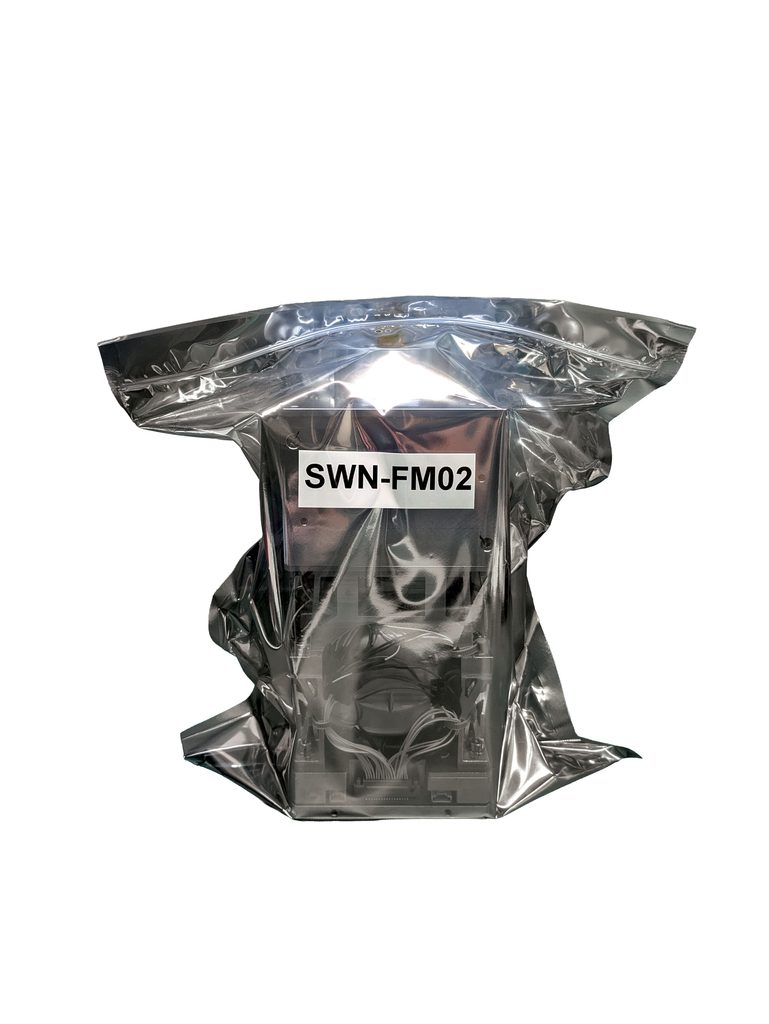
As of writing, OhmSpace has successfully delivered two mission-ready STAR-Water-nano Gen 1 units to its IOD partners: one to CubeSat and smallsat manufacturer HEX20 in India, and another to satellite integrator and manufacturer C3S Electronics Development in Hungary (the latter for the OPS-SAT ORIOLE mission supported by ESA and co-developed by C3S with Spaceit and Golbriak Space in Estonia).
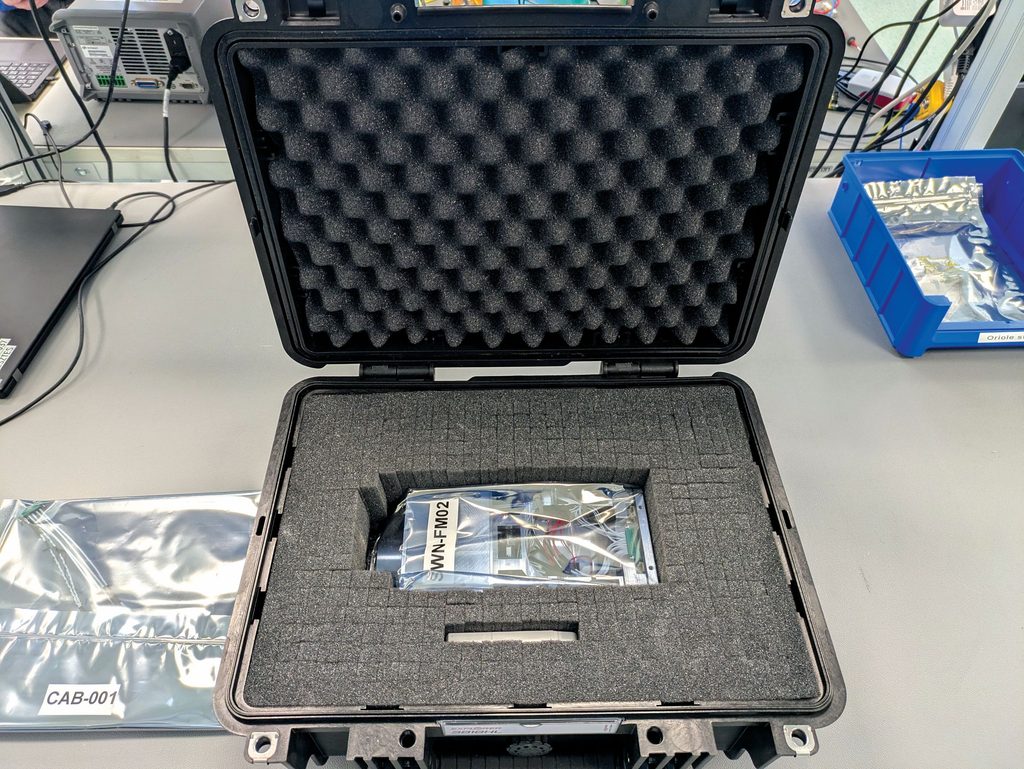
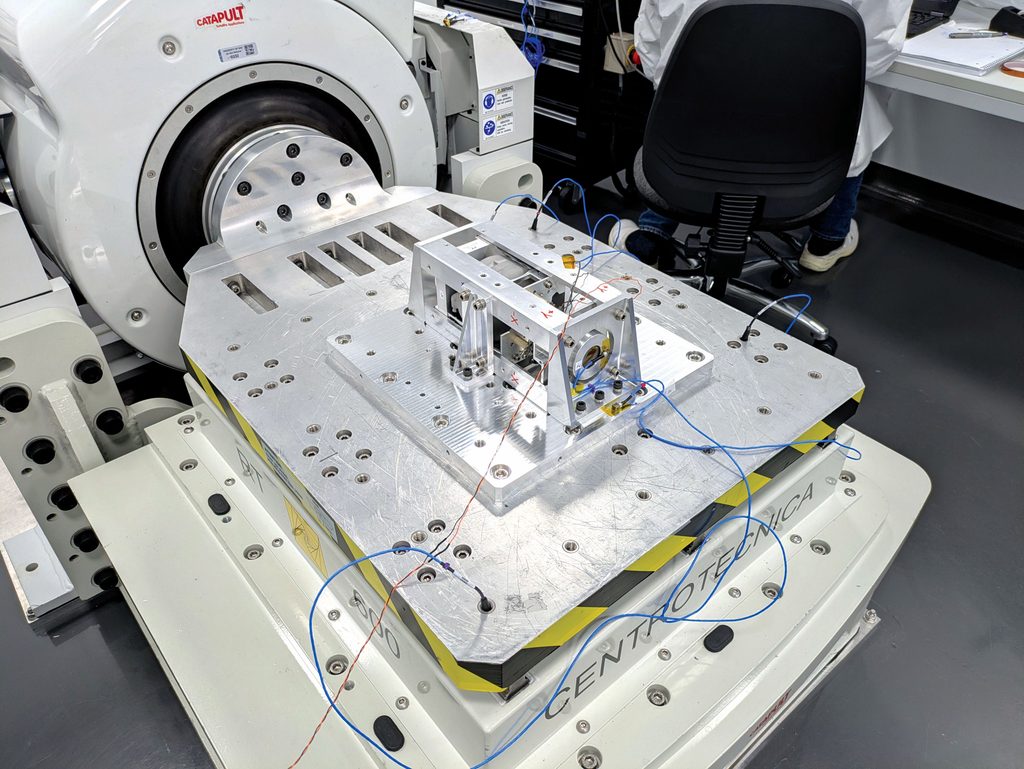
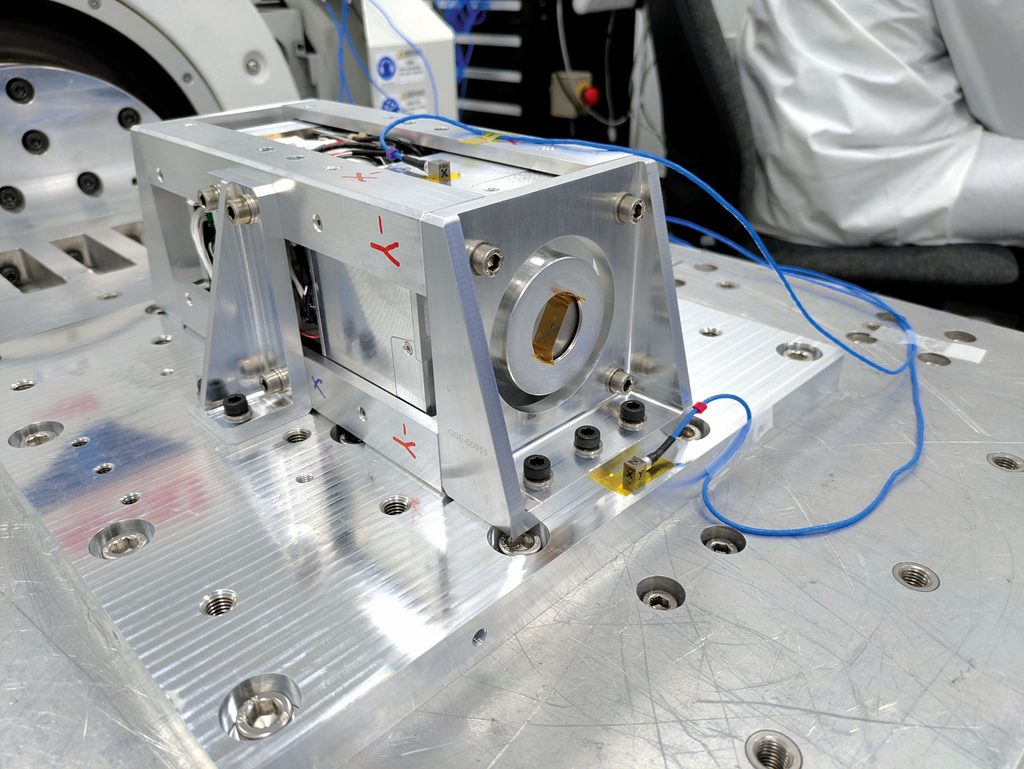
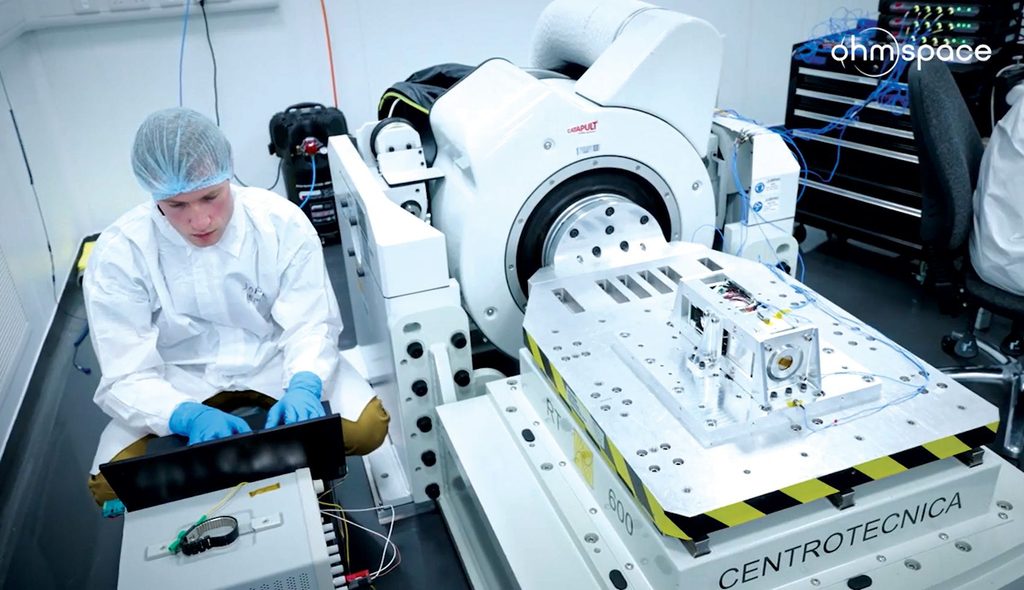
“With HEX20, we’re at the very end of the integration phase, and they are completing the flight acceptance tests [at the time of writing], including TVAC and vibration testing, so the satellite is ready to be shipped for launch and there’s no remaining work on our side for that,” Romei says.
“C3S meanwhile is still integrating the satellite, including the first ever Estonian space payload; ORIOLE is a more complex mission, owing to the consortium-nature of it, whereas HEX20’s mission is something we’re more directly involved with.”
With ORIOLE set for launch in February 2027, OhmSpace may perform some final firmware optimisations for the FPGA between now and then, but ultimately the STAR-Water-nano unit has been delivered, and OhmSpace’s personnel has attended the launch site to train the mission team on fuelling, de-tanking and other duties key to sound integration.
With Gen 1’s development officially concluded, after a roughly two-year journey starting in early 2024 with the ESA contract, a new €500,000 contract has been made to fund development of the Gen 2 STAR-Water-nano, with a timeline set for completion around the end of Q4 2027.
Gen 2 will first incorporate the unnamed partner’s proprietary additive material for the heater – including OhmSpace’s printing process for producing it – and the ensuing operating temperature, performance, endurance and reliability increases.
Romei’s team will also target a more compact system footprint, which should enable STAR-Water-nano to fit almost entirely within the 80 mm dia. x 78 mm TunaCan present in CubeSats, after which it will look to qualify the series of modular tanks previously mentioned.
“We’ll also work to improve the PCU’s efficiency and, overall, we’ll leverage the lessons learned from Gen 1 and everything we can learn from the IODs to make for a more streamlined, compact and high-performing product,” Romei says. “We completed the preliminary design review in July, and we’ll complete the critical design review in early 2027.”
OhmSpace is also working on other products. The aforementioned STAR-X is a resistojet slated for geostationary telecommunications platforms, and it will have a power throughput of around 500 W (making it 10 times as powerful as STAR-Water-nano), to form part of ESA’s Advanced Research in Telecommunications Systems (ARTES) programme. As indicated, STAR-X will leverage refractory metals to run on noble gases and withstand internal temperatures of 2000 °C, enabling an above 80 s Isp with xenon.
It is also in the initial development phases of a STAR-Water-micro resistojet, via the ESA incubator in Rome; that product will work on a 500 W power input like STAR-X but run on water, purportedly achieving up to 150 mN of thrust and Isp of 240 s.
“Lastly, we’re in a bit of a stealth mode on developing a platform, off the shelf, which will integrate our STAR product family and save our clients the work of redesigning or integrating our solutions for single-mission cases,” Romei says. “That’ll mean it’s ready-made with optimised orbital and attitude control systems, in a fully integrated mobility package.”
With so many successful partnerships, upcoming launches and a growing portfolio of high-performance thrusters, OhmSpace doubtlessly bears close watching in the years ahead.
Key specifications
STAR-Water-nano
High-temperature resistojet
Target Isp: >200 s
Propellant: Water
Dimensions: From 2U (88.9 x 482.6 x 600–914 mm)
Tank capacity: From 250 g
Impulse: From 500 Ns
Maximum power: 50 W
Maximum thrust: 20 mN
Interface: RS-422
Radiation resilience: 5 krad
UPCOMING EVENTS