
AI servers in space
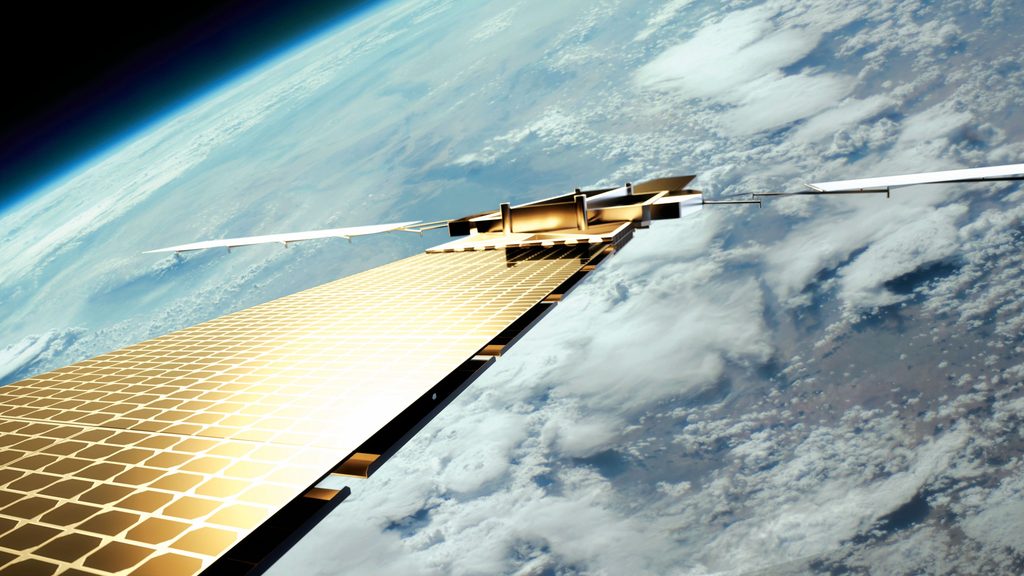
(Image: Sophia Space)
Compute beyond the clouds
Data centres and AI compute are set to occupy Earth’s orbital space. Nick Flaherty examines the pioneering technology required
Putting AI servers into space addresses some of the key issues with data centres, notably their power and cooling requirements. Rather than relying on the terrestrial grid and air conditioning or immersion cooling, AI servers in space use effectively unlimited solar energy for power.
However, there are challenges to the launching of such systems and their deployment in LEO. Communication between satellites and with the ground is also a key issue, while launch costs are a critical part of overall system cost. The technology curve suggests launch to LEO may reach $100 per kilogram by the mid-2030s with the StarShip launcher from SpaceX.
A satellite in SSO can capture solar power continuously with no weather or atmospheric loss, avoiding Earth’s grid, land and cooling constraints. These orbital satellites with localised compute take advantage of readily available power and cooling in space and beam back data via high-bandwidth lasers to established communications satellites.
The cooling requirements of monolithic data centres with many hundreds of AI processors mean large radiators are needed that are far too heavy to send into orbit cost-effectively. Instead, what is proposed is a constellation of satellites, each with a rack of AI servers, connected via high-bandwidth, low-latency laser links. Analysis of terrestrial systems (see below) shows that such a system is not only viable but possible with COTS components.
Power & compute
A leading example of this architecture is the approach being developed by SpaceX, which launched its third generation of communications satellite at the end of September 2026. The proposed AI satellites, which are 30 m (98 ft) high with a wingspan of 75 m (246 ft) to hold the solar cells, are based on the V3 satellite design. The compute payload has a peak power requirement of 250 kW or an average of 175 kW, using the D3 AI processor being developed by Tesla specifically for operation in space. The D3 has a significantly higher power requirement than terrestrial versions and is also radiation-hardened with redundancy to mitigate errors from cosmic rays.
The chip consists of multiple die measuring 654 mm² manufactured by Samsung in a single array package. The die are packaged using Intel’s Embedded Multi-Die Interconnect Bridge technology, which uses dense silicon bridges.
The 175 kW average power implies that the satellite is the equivalent of a standard AI rack from other suppliers (see below). This gives the satellite an efficiency of 75 kW/tonne, which is a key metric for the launch vehicle and gives a weight of 3.3 tonnes for the overall satellite.
To power the AI compute, the solar arrays generate 210 kW to cover the average load with a power density of 250 W/m². This array is derived from the technology already powering thousands of Starlink satellites and also used for the V3 generation of satellites. The solar cells are printed on a continuous roll called a solar blanket. For the V3 satellite, this blanket is cut into segments that are 19 m long with four segments then stitched together to form a complete solar array.
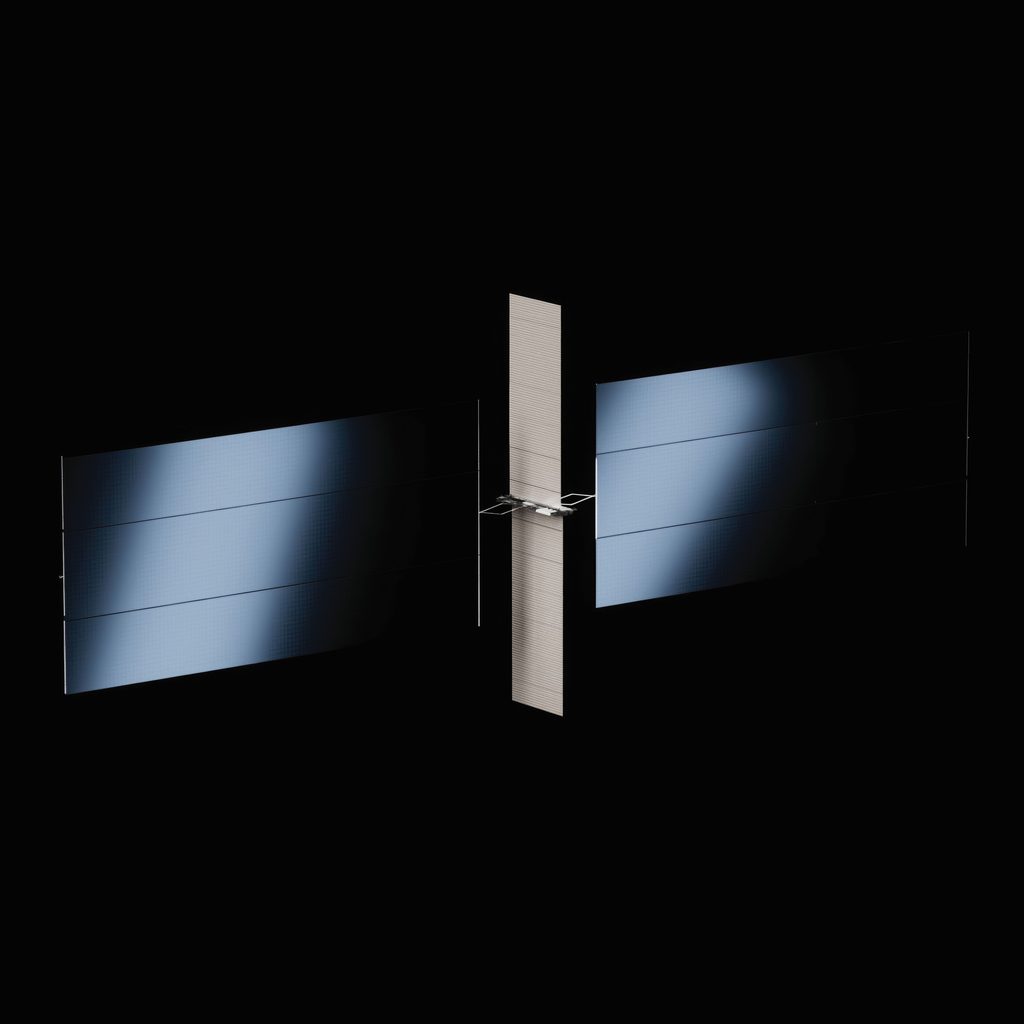
(Image: SpaceX)
Cooling is a key requirement and has long been seen as a limiting factor. The deployable liquid radiators for the AI satellite, which measure 160 m², reject heat into the vacuum of space using active fluid cooling with redundant pumping loops. The radiator also includes integrated micrometeoroid shielding, providing a dual use of the materials for the cooling system that faces away from the sun to radiate heat away from the rack.
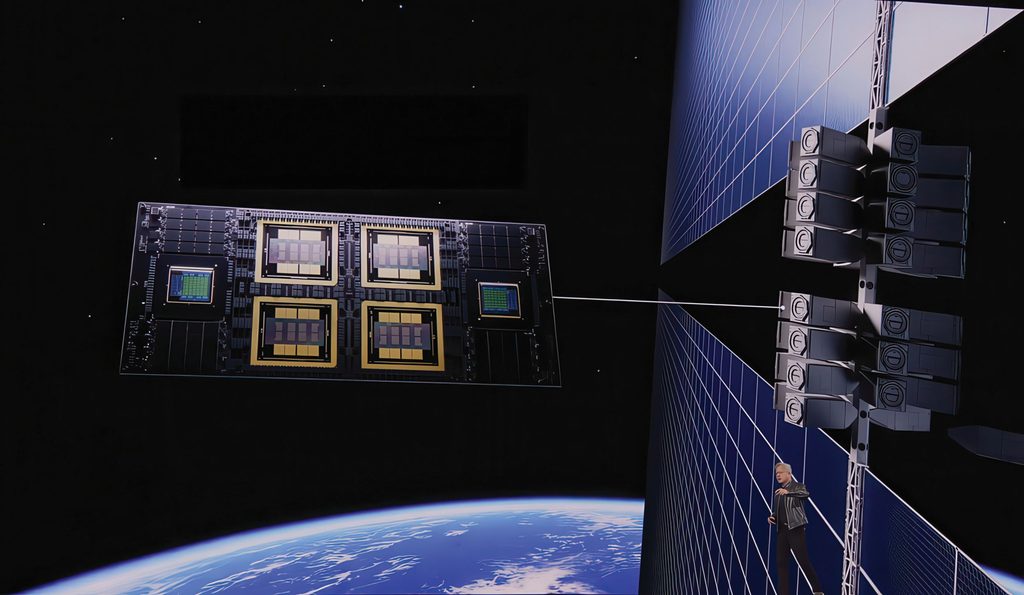
AI chip designer NVIDIA has also been focusing on providing the processors for AI servers in space.
The Space-1 Vera Rubin Module is the latest element of a processor platform for space. Compared with the H100 Hopper GPU two generations ago, the Rubin GPU on the module delivers up to 25 times more AI compute for space-based inference, enabling large LLMs and advanced foundation models to operate directly in space. A tightly integrated CPU–GPU architecture and high-bandwidth interconnect provide the performance and memory needed to process massive data streams from space-based instruments in real time.
Sophia Space is building modular, passively cooled, hosted computing platforms that give customers dedicated infrastructure to run applications directly in space using the NVIDIA technology.
US Patent No. 12,679,564, titled Space-Based Data Centers, details architectures for the implementation of large-scale, modular data centres in space. The architecture uses free energy from the Sun to power onboard computers and data storage designed specifically to operate in a space environment, while passively radiating heat into deep space.
(Image: NVIDIA)
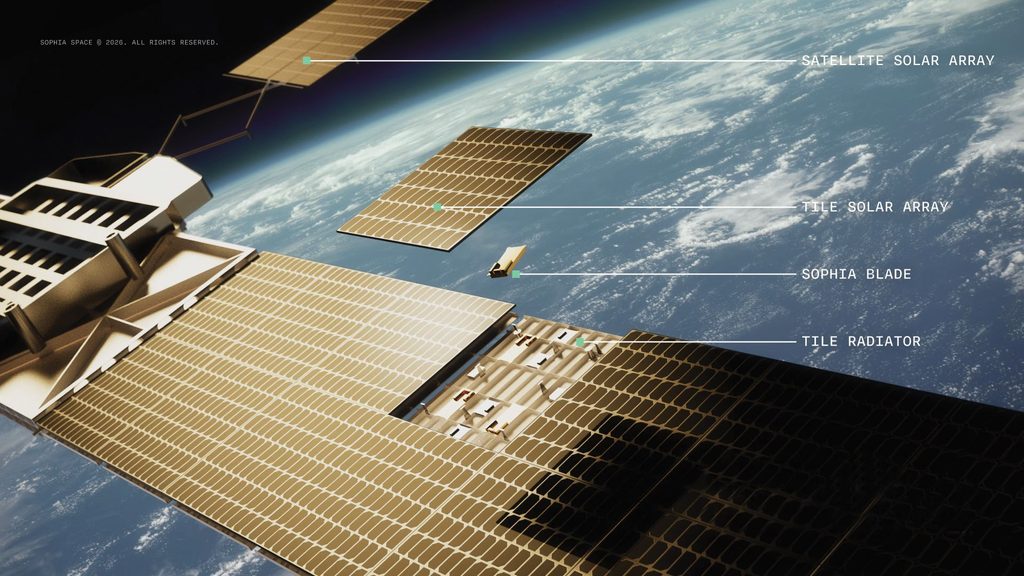
A planned constellation of 10 satellites is slated to start operating in 2028 using Sophia’s Thermal Integrated LEO Edge (TILE) architecture. The TILE unifies power generation, edge computing and passive thermal management into tabletop-sized units. These being rigid, flat modules roughly one meter square by a few centimetres thick that are designed to fold for launch and autonomously unfold in orbit.
Each TILE integrates its own solar cells for power and dedicated radiative cooling panels that use specialised heat spreaders pressed against aluminium alloy to dump waste heat directly into deep space.
The TILE has a layered structure including solar cells that form a layer across a first surface, with thermal radiator panels forming another layer across a second surface. The electronic components are distributed laterally in a layer between the layer of solar cells and the layer of thermal radiator panels. Thus, each electronic component receives power locally from the solar cells and rejects heat to the thermal radiator panel beneath it. The first subset of tiles is for compute with one or more computing processor and memory, while a second subset comprises support tiles in which the electronics components include network switches and energy storage.
The heat-spreading layer is made of thermal pyrolytic graphite combined with heat pipes that are flexible so that they can be folded for launch. The thermal radiator panels are made of aluminium cladding.
The units link via fibre-optic connections, ensuring high-speed data transfer between adjacent nodes without sharing vulnerable electrical or physical thermal connections.
(Image: Sophia Space)
Thousands of individual TILEs can connect together like a distributed computing mosaic to scale up total processing capacity. The passive design allows nearly 92% of onboard power to focus entirely on computation. Failures are contained to individual TILEs, enabling graceful degradation and continued operation even with hardware faults caused by radiation.
SunCatcher
Google is also developing a system for its tensor processing unit (TPU) accelerator chips with free space optics for high-bandwidth, low-latency inter-satellite communication with 1 km separation. This is very close for a satellite constellation and high-precision machine learning-based flight control models are used to control large-scale constellations with 81 satellites, enabling close flight proximity to be maintained while avoiding collisions.
Trillium TPUs are radiation-tested and can survive a total ionising dose equivalent to a five year mission life without permanent failures and are characterised for bit-flip errors.
Optical links will also be needed for high-bandwidth communication with the ground, but for a pilot project, radio suffices and avoids the challenges of overcoming atmospheric interference. Maintaining a dawn–dusk orbit will increase latency to some ground locations, but is advantageous for maximising power. Cooling would be achieved through a thermal system of heat pipes and radiators while operating at nominal temperatures.
Radiation tolerance
Increasingly, COTS hardware has been used for space missions. However, high-performance AI processors and GPUs are characterised by a cutting-edge process node, large die size and high floating-point operations per second (FLOPS) capability and represent a new frontier for COTS hardware in space.
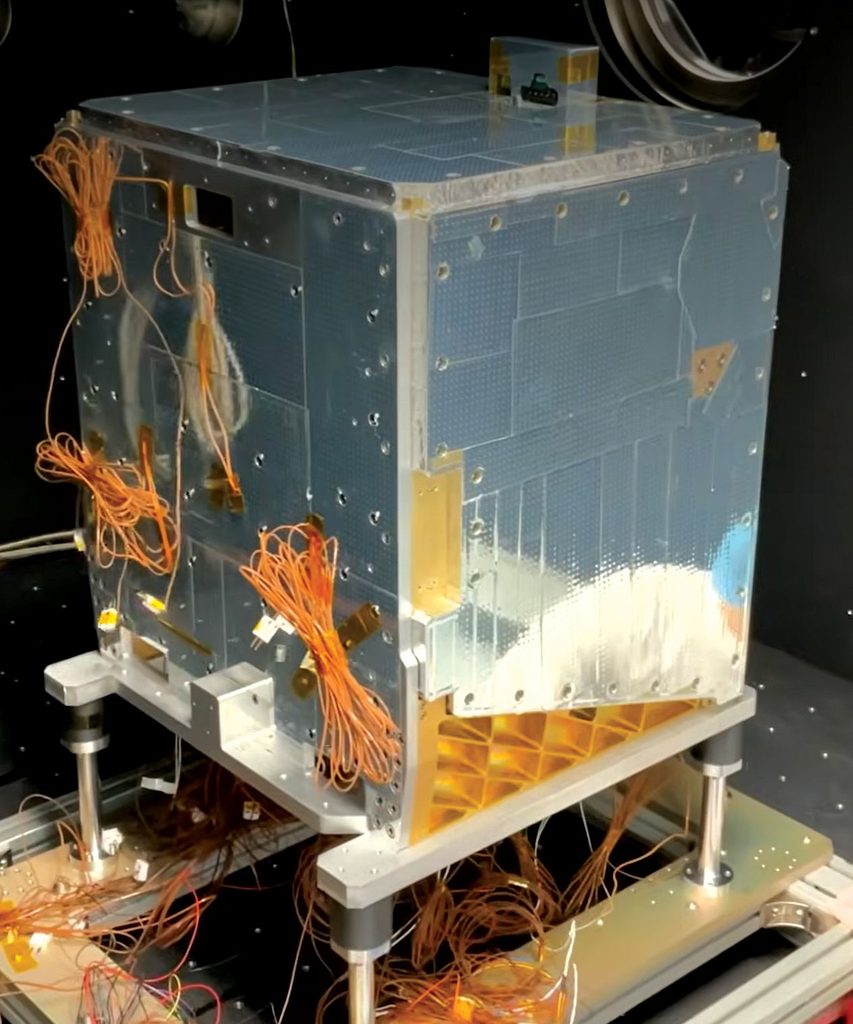
The latest V6e Trillium Cloud TPU with its associated AMD host server has been tested using a 67 MeV proton beam to simulate the operating conditions of an SSO LEO for the first time.
(Image: Google)
For the target SSO LEO with significant shielding of 10 mm of aluminium, the radiation environment is primarily composed of penetrating protons and galactic cosmic rays, resulting in an estimated dose of 150 rad(Si)/year using industry-standard space radiation analysis tools.
The sensitivity to radiation events depends on the process node and cell libraries used, and has historically decreased, but this trend does not hold beyond the 5 nm node. For AI accelerators to be useful for machine learning in space, they must survive the expected five year lifetime total dose (TID) of 750 rad(Si), and single events must be at levels manageable through techniques such as memory error correcting codes. Undetected events are a particular concern for model training because undetected bit-flips can lead to silent data corruption (SDC), which may occur in any operating environment, not just with single events. The covert nature of these errors requires careful calibration, detection and correction techniques.
Of the different elements in an AI accelerator, the high-bandwidth memory (HBM) subsystems exhibited the most sensitivity to TID. In tests, HBM-specific stress tests began to show irregularities after a cumulative dose of 2 krad(Si), which is almost three times the minimum requirement for total dose survival of
750 rad(Si). All other tests, including end-to-end AI workloads and compute-centric tests, continued to operate correctly up to the maximum tested cumulative dose of 15 krad(Si) on a single chip. No hard failures were attributable to the total dose up to this level.
Core logic and on-chip SRAM are the components that are most sensitive to single events, primarily manifesting as SDC during end-to-end machine learning workloads. For typical workloads using transformer operations, the observed SDC rate of approximately one event per 17 rad, at an estimated orbital dose of 150 rad(Si)/year, translates to a very low failure probability – on the order of one per 3 million inferences, assuming one inference per second. While this error rate is likely acceptable for inference, the impacts of single events on training jobs, and how effective system-level mitigations are, require further study.
Radiation testing of the host system, with a focus on single-event functional interrupts that manifest as system crashes or reboots, suggests a rate of one such event per 450 rad(Si) for a CPU and 400 rad(Si) for RAM.
Starcloud
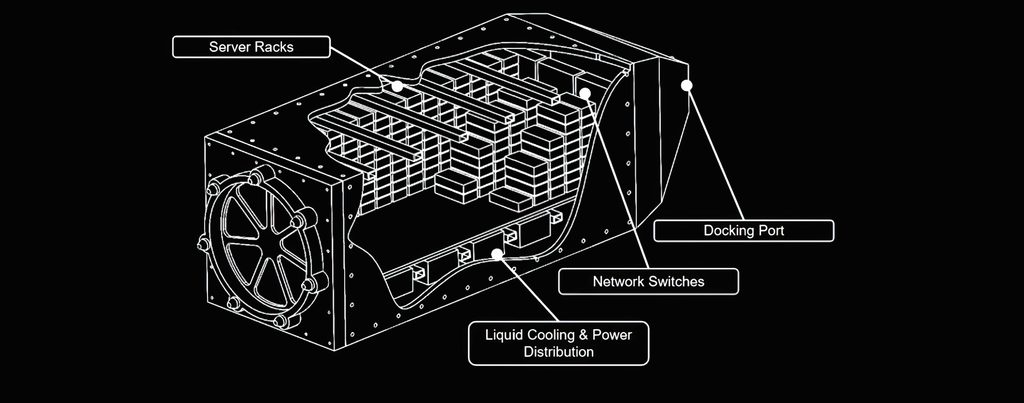
Starcloud is building purpose-designed orbital data centres to deliver cloud and AI infrastructure directly in space with NVIDIA chips. A test satellite, LUMEN-1 (now called starCloud-1) was launched in November 2025 with NVIDIA’s H100 GPU running Google’s Gemma AI framework.
The satellite is built on an Astro Digital Corvus-Micro bus and weighs 60 kg. The H100 GPU is enclosed in a custom shielded aluminium pressure module designed to survive radiation exposure and heat dissipation constraints in LEO.
However, the satellite is in a mid-inclination circular orbit at 500 km altitude and 45.4° inclination, rather than a dawn–dusk SSO, meaning that it experiences normal eclipse periods and operates on battery/solar cycles.
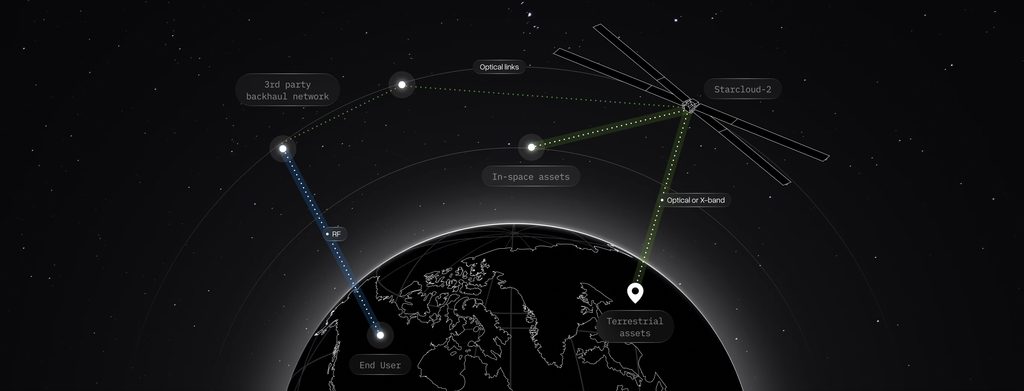
Starcloud has equipped its constellation with Starlink Mini Laser terminals. Each satellite carries multiple crosslink transceivers capable of speeds of up to 25 to 100 Gb/s per link over distances up to 4000 km.
(Image: Starcloud)
Inter-satellite links
The required aggregate bandwidth per link, on the order of 10 Tb/s, is achievable using COTS Dense Wavelength Division Multiplexing (DWDM) transceiver technology operating in the infrared, similar to that used in terrestrial data centres. The primary challenge is that such equipment requires significantly higher received optical power levels, on the order of hundreds of microwatts, compared to the 1 μW levels typical for traditional long-range links. These power levels can be achieved by drastically reducing the inter-satellite distance. This is because over distances larger than the Fresnel limit the received power scales with the inverse square of the distance owing to beam divergence. Therefore, flying the satellites in a close formation within hundreds of kilometres or less provides ample power to close the link budget for high-bandwidth COTS transceivers.
As the distance becomes very short, for example 5 km, spatial multiplexing emerges as a new opportunity for further scaling. The smaller beam spot size at shorter distances allows multiple independent beams to be established between transceiver arrays on different satellites, each carrying a separate DWDM data stream.
For example, a single 10 cm total aperture can be populated with a 2 x 2 array of independent 5 cm optical systems at a link distance of 1.25 km, or a 4 x 4 array of 2.5 cm systems at 0.32 km, scaling the total bandwidth with the number of parallel links. This enables further scaling of bandwidth inversely with distance, analogous to achieving high aggregate bandwidth through parallel spatial streams. In this spatially multiplexed regime, the use of coherent detection provides inherent rejection of cross-talk from adjacent beams.
The interconnect technology of the latest SpaceX Starlink V3 satellite shows the potential for the AI server craft. Each V3 satellite is equipped with six high-capacity 400 Gb/s lasers, allowing high-bandwidth traffic to flow uninterrupted between any two points on the ground with redundant paths across a petabit laser mesh network.
Cooling
Dispersing excess heat from the AI server is seen as a major challenge for space systems given the lack of convection cooling. However, heat radiation increases sharply as a surface gets hotter – proportional to temperature to the fourth power according to the Stefan-Boltzmann principle. Running internal components and radiators at higher allowable temperatures drastically shrinks the physical surface area needed for the cooling panels, but the higher temperature requires more focus on insulating the radiators from the rest of the vehicle.
(Image: Starcloud)
Ultrasonic additive manufacturing (UAM) techniques can simplify and miniaturise a system by embedding fluid channels directly into the integrated satellite chassis and the external radiator to create integrated multifunctional structures. Using UAM 3D printing can improve baseline thermal performance by over 200% with a mass saving of more than 30%, together with savings on cost and schedule of better than 50%. The system also features flexible, multi-axis rotary fluid unions and an integrated geared micro-motor, which enables the two-stage deployment and solar tracking of the radiator. Passive vibration isolation and jitter cancellation involves technologies such as a floating wire-rope isolator design, particle damping, flexible pyrolytic graphite sheet thermal links and a custom Kevlar isolated cryogenic electro-optical detector mount.
Effective thermal control requires balancing emissivity, absorptivity and reflectivity, ensuring that the PCBs minimise solar heat absorption while maximising radiated emission of heat to the cosmic background.
One unconventional way to address this complex thermal management challenge is with a distributed heat dissipation design at the PCB level, rather than at the system level. This approach combines polymer composites with precision metal board-level shields to create radiant heat sinks. The design minimises reliance on conduction or convection, leveraging radiation as the primary heat-transfer mode. It also eliminates bulky, costly traditional thermal solutions and enables more uniform thermal performance across the device.
LEO is among the harshest operational environments. While atmosphere is nearly absent, collisions with the remaining high-energy particles, such as atomic oxygen, can sever even the strongest chemical bonds. Additionally, UV and space radiation are intense, and these environmental challenges can degrade, discolour or ablate organic materials quickly, ultimately altering their optical properties.
Any drift in emissivity, absorptivity or reflectivity can compromise PCB function and system performance. Properties must remain stable to ensure long-term thermal reliability. While there are many high-temperature, space-rated polymers such as polyimides and aramids, these materials tend to degrade more noticeably under long-term radiation or atomic oxygen exposure. They also often experience shifts in optical properties over time, which can disrupt stable heat dissipation. These drawbacks make them less than ideal for sustaining consistent emissivity and absorptivity over the operational life of a satellite.
Fluoropolymers offer unmatched resistance to radiation and atomic oxygen with minimal property degradation. However, they come with certain drawbacks: low emissivity in thin films, high molecular weight and transparency, meaning minimal intrinsic reflectivity.
To overcome these issues, a thin vapour-deposited metal layer such as silver, aluminium or gold is added to the rear side of the fluoropolymer. This configuration reflects broadband solar radiation while the fluoropolymer emits narrowband thermal energy. Increasing the thickness of the fluoropolymer layer increases emissivity and balances the thermal output. This creates a second-surface mirror, which is a proven tool in spacecraft thermal control.
Traditionally used on the external surfaces of a spacecraft, second-surface mirrors minimise solar heating and radiate heat when oriented away from the sun. Integrating them directly onto PCBs by laminating them to precision metal components creates localised radiant heat sinks that meet thermal goals without significant weight penalties.
Further, by distributing the heat sinks across the PCB, the design increases the effective radiative surface area and reduces power density in any single location. It also makes the thermal design orientation-agnostic, performing consistently regardless of the satellite’s position relative to the sun. Importantly, the system meets all outgassing requirements and resists UV, atomic oxygen and thermal cycling, enabling long-term stability.
As thermal loads grow and design margins shrink, managing heat has become more challenging. However, addressing thermal challenges is essential to enabling innovation and performance in space. By combining materials in novel ways and embedding cooling architectures into electronics to create integrated thermal solutions, engineers can address thermal, size and weight challenges while minimising system complexity.
Effective thermal management is a critical optimisation challenge for power-dense processors operating in a vacuum. Advanced thermal interface materials and heat transport mechanisms, preferably passive to maximise reliability, are essential to efficiently move large heat loads from the chips to dedicated radiator surfaces.
Managing potential failures and increasing reliability of compute in space will be critical. Currently, failed processors are manually replaced by technicians, which is relatively simple and low-cost on Earth but obviously impracticable in space. The simplest solution is redundant provisioning. There are also promising research programmes aiming to increase system tolerance to faults affecting networking, for example via reduced communication.
Developing robust optical satellite–ground communications will also be critical for scaled operation, but will necessitate overcoming challenges including atmospheric turbulence, high-speed relative motion errors and precision beam tracking. This is an active field of development.
Proposals exist for monolithic data centres in space where individual spacecraft significantly exceed the size of any current or planned launch vehicle. While such design concepts reduce the need for high-performance inter-satellite links, they involve new challenges because the structures would have to be assembled in space by humans or robots. Collision avoidance would also be more cumbersome and structural requirements would add mass and complexity.
Acknowledgements
With thanks to Blaise Aguera y Arcas and Travis Beals at Google Suncatcher.
Some suppliers of AI servers
USA
| AMD | +1 408-749-4000 | www.amd.com |
| Axiom Space | +1 346 293-7045 | www.axiomspace.com |
| HPE | +1 888-342-2156 | www.hpe.com |
| NVIDIA | +1 408 486-2000 | www.nvidia.com |
| Planet Labs | +1 415 829-3313 | www.planet.com |
| Qnity/Laird | +1 636 898-6000 | www.laird.com |
| Sophia Space | +1 310 322-1107 | www.insophiaspace.com |
| Starcloud | +1 425 883-1300 | www.starcloud.com |
UPCOMING EVENTS