Magnet-powered braking for safer spacecraft reusability
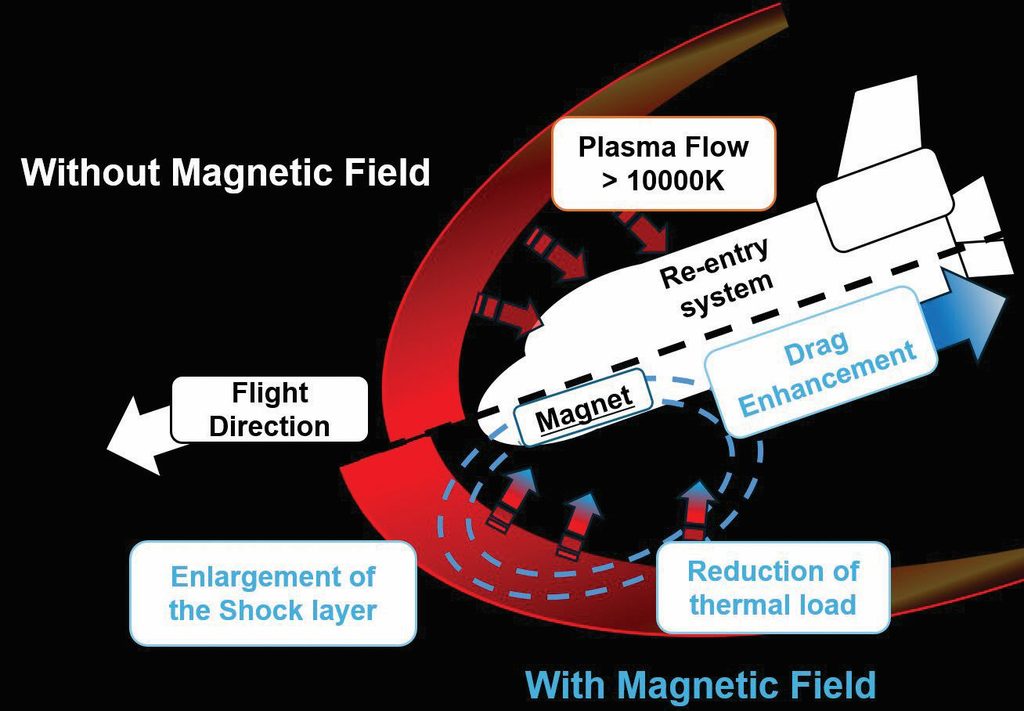
(Image: Tokyo Metropolitan University)
Researchers from Tokyo Metropolitan University (TMU) have created a platform that simulates magnetohydrodynamic aerobraking (MHD) for spacecraft re-entering the atmosphere, writes Chris Young. The new platform could pave the way for tests using real spacecraft on re-entry to Earth’s atmosphere.
MHD could complement or replace some heatshield materials, while also helping to reduce the speed of a spacecraft re-entering Earth’s atmosphere. The experimental technology applies a magnetic field to the plasma layer surrounding a spacecraft on re-entry. This magnetic field can create a gap between the craft’s surface and the extreme heat of the surrounding shock wave layer.
The TMU researchers formed their electromagnet with a customisable set of coils powered by a pulse-forming network. This generates a strong field for only a short period of time, making higher magnetic field strength tests feasible.
During tests, the researchers generated a magnetic field of 1.58 Tesla in front of the model. This is double the magnetic field strength of the next strongest neodymium permanent magnet.
According to the scientists, this represents the “world’s highest level of magnetic field strength for an MHD aerobraking experiment at a speed of approximately 7 km/s.” Following their successful tests, the researchers are now working towards a practical flight demonstration using re-entry capsules lifted to suborbital space by a sounding rocket.
UPCOMING EVENTS