
Moon dirt simulant to enable advanced testing of Moon-bound hardware
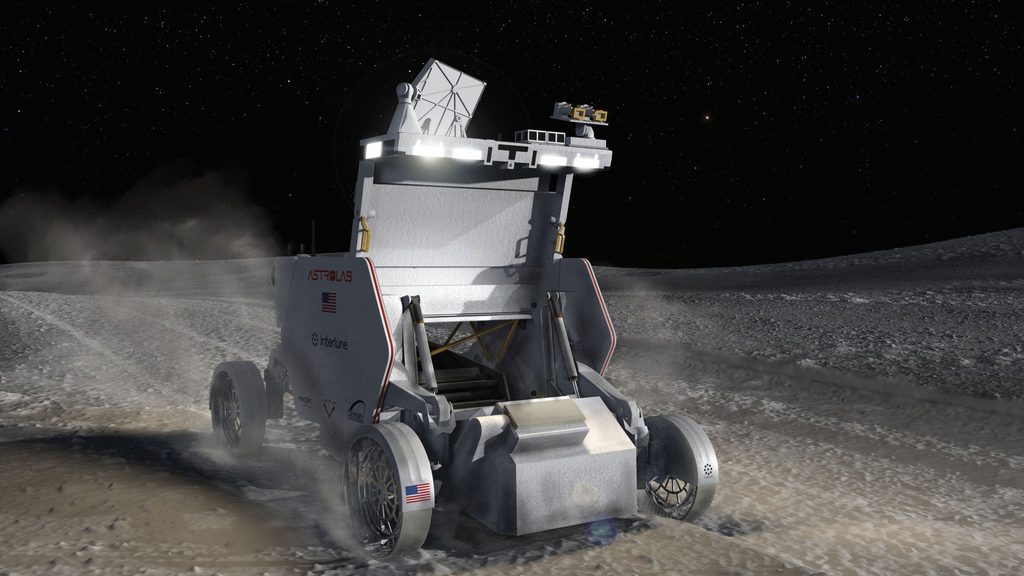
(Image: Astrolab)
Seattle-based Interlune, a space infrastructure and resources company, successfully implanted and then extracted helium-4 in simulated Moon dirt, writes Chris Young. Their results could allow them to produce the first commercially available lunar regolith simulant that replicates an effect known as solar-wind implantation.
The Interlune team implanted helium into ilmenite, the primary helium-bearing mineral found in lunar regolith. They recreated the natural solar-wind process, which can take nearly 15,000 years of exposure to implant helium and other volatile gases into regolith. By completing their process in about four hours, they achieved their goal nearly 32 million times faster.
To recreate the solar-wind process in a lab, the team filled a vacuum chamber with helium gas. They then heated a filament until it emitted electrons, which interacted with the helium, producing plasma. The researchers then accelerated the helium ions within the plasma toward the simulant at energies mimicking helium’s behaviour in the solar wind.
Using a mass spectrometer, the Interlune team measured the chemical makeup of the gas released as the ilmenite was gradually heated, allowing them to confirm that the helium was implanted in the simulant in the same way that it would be in lunar regolith. The helium released was between 300 and 800 oC, consistent with the range observed in Apollo sample studies.
“One of the biggest hurdles to demonstrating mechanical processing technology is having a test material that is sufficiently representative of real lunar regolith,” explained Dr Elizabeth Frank, Interlune chief scientist. Following the tests, Dr Frank stated that the Interlune team is confident that hardware tested on Earth using their simulant “will perform as expected on the Moon.”
UPCOMING EVENTS