


Reflex Aerospace
(All images: Reflex Aerospace)
If the mission can’t wait
Chris Young learns how Reflex Aerospace’s algorithmic engineering techniques and lean system design processes cut satellite development cycles by an order of magnitude
For years, space launches were governed by rigid quality assurance procedures and time-consuming failure analyses. And with good reason: if you send hardware to space at great expense, you want to make sure it will function for as long as possible.
Then, SpaceX’s Falcon 9 dominance drove launch costs down and made space more accessible, greatly altering the pre-launch process for many. According to Reflex Aerospace CTO Felix Motzki, it has veered towards the other extreme.
“Now, we can put hundreds of CubeSats, or very small satellites, on a launcher and deploy them,” Motzki told Space Systems Technology. “If one doesn’t work, the launch only cost a couple hundred thousand – not millions – so that’s not so bad. This means you don’t have to apply these quality measures. You can use commercial off-the-shelf materials, and if it works, it works!”
Reflex Aerospace aims to swing the pendulum back in the other direction, while still providing the speed operators have become accustomed to in the New Space era. CEO Walter Ballheimer has publicly referred to the company as having a “next space” approach. By leveraging generative and additive manufacturing, it delivers highly tailored satellites within a 12 to 18 month window.
As Motzki told us, Reflex has taken strong cues from industrial automotive manufacturing processes. It has also had to be selective about the services it will provide – “if you can do it with a CubeSat, we won’t do it,” he stated.
Baptism of rocket fire
Founded in May 2021 by a group of German aerospace and industry veterans, Reflex Aerospace quickly earned attention for its offer of customised, high-performance, payload-centric satellites delivered within tight deadlines of roughly 12 months – far faster than the traditional timelines of three to five years.
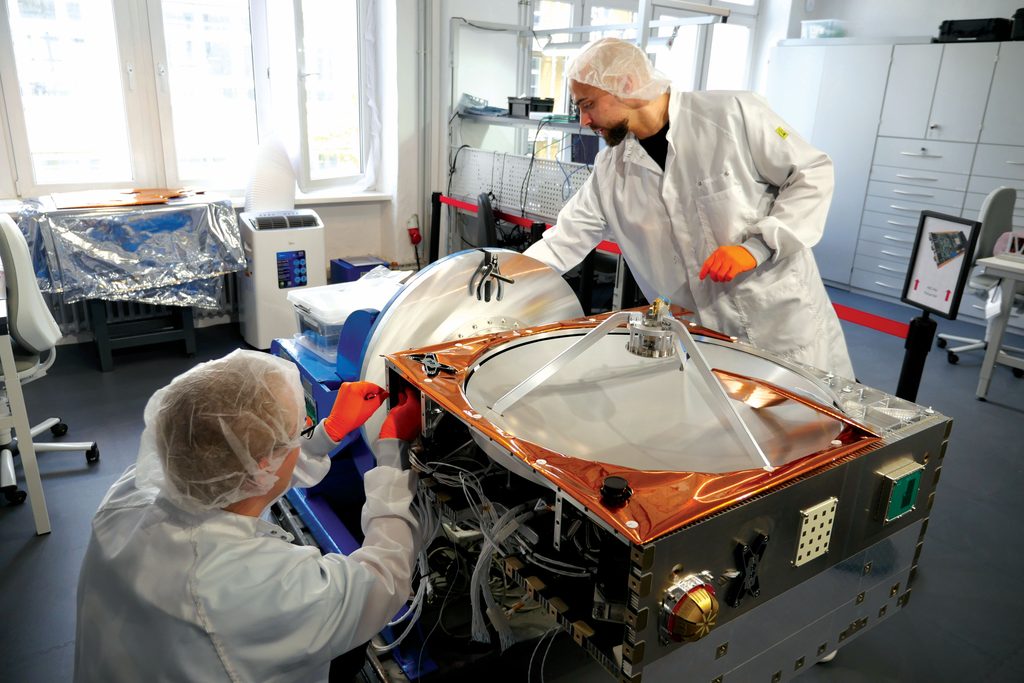
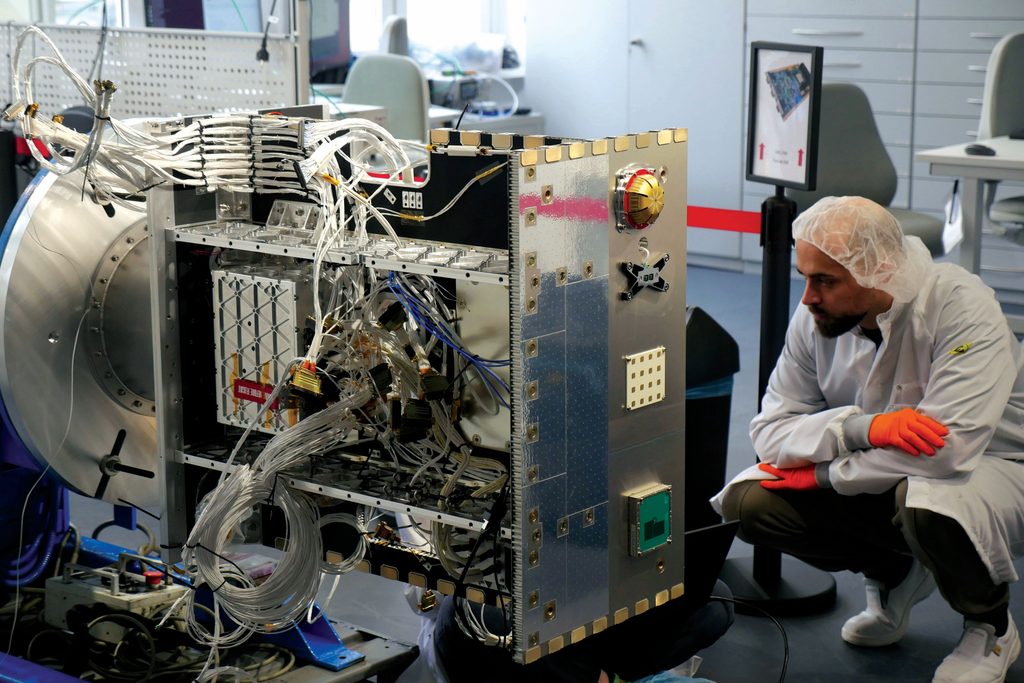
Fittingly, when Motzki joined Reflex in March 2023, initially as VP of engineering, he was immediately faced with a taxing pre-launch grind. Reflex had a year and a half to deliver SIGI, its first technology demonstration mission, which would carry a remote sensing payload for Germany’s Media Broadcast Satellite. Despite the impending deadline, the team had barely begun developing its onboard computer.
These early months were “really tough,” Motzki said, adding that space deadlines can feel “toxic” when approaching launch. “At the end of the day, the rocket will leave with or without you.” He continued, “We had roughly 18 months [and] we had only started to develop an onboard computer and we had [just] a couple of good engineers.”
This was far from where Reflex needed to be and, somewhat counterintuitively, Motzki’s initial efforts were focused on making sure the company’s engineers weren’t whisked away from their engineering duties.
Ultimately, his goal was to bring in the right people and then make sure “everyone was totally 100% focused on the goal to launch the satellite,” Motzki said. Those two things bring you a long way, he added, “but I had to constantly reinforce it,” making sure the team wasn’t spread too thin by taking on funding and sales projects rather than focusing on the main goal.
Motzki credits Ballheimer with allowing him to truly take the reins and prioritise the engineering over anything else. “I think this is really where, from my experience, startups fail,” Motzki stated. “If they do not do that, they cannot focus on their main value proposition.
“Ultimately, we needed to show that we could launch a satellite,” he continued. “Only by doing that would we get more funding. It was clear that we would not survive by serving those other projects. We would only survive if we could show our capabilities. So, it was 100% focus!”
The road to SIGI
Over the following 18 months, Motzki played a pivotal role in building the team and the technologies required for launch. As he put it, “There were some key areas where we needed key people and I had to bring them in as fast as possible.”
Under the current CTO’s guidance, the Reflex engineering team developed that initial onboard computer concept into the Autonomous Reconfigurable Computer (ARC), a software-defined, modular, reconfigurable avionics unit that handles both platform and payload data. According to Motzki, racing against the clock to build this and other subsystems resulted in long nights and weekends working at the office.
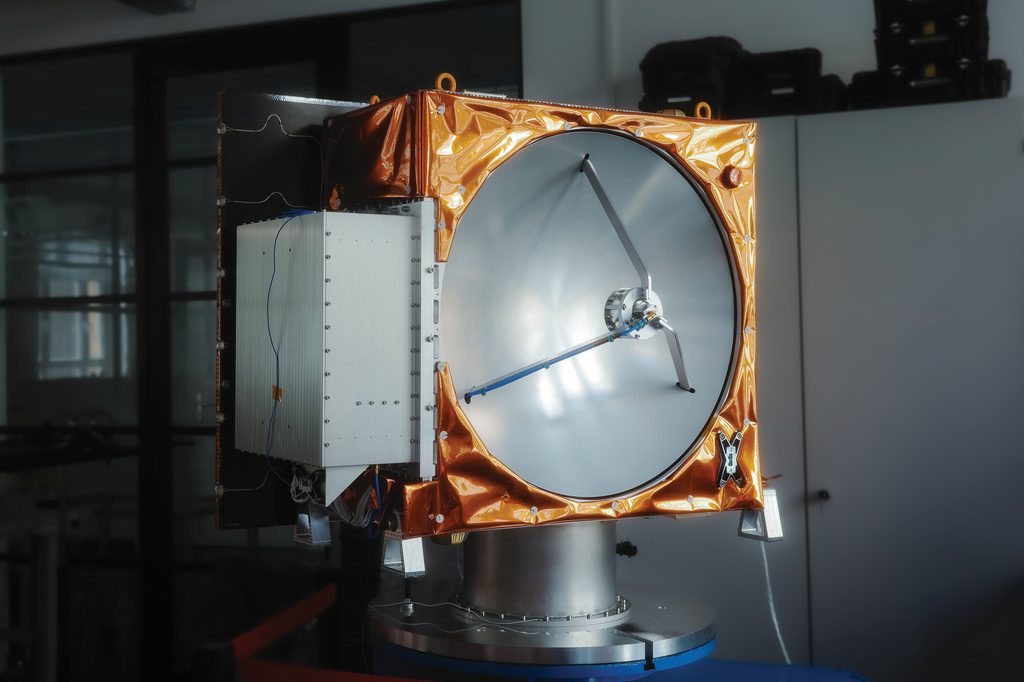
The resulting ARC system features a radiation-tolerant design with configurable hardware and software to enhance mission adaptability. The unit’s main flight computer uses the Zynq Real-Time Processing Unity (RPU), configured with lockstep CPUs, and TMS570 microcontrollers for watchdog and redundancy features. The payload computer, meanwhile, uses the Zynq Application Processing Unit (APU), a Petalinux OS and solid-state storage – the latter has no moving parts, provides resistance against extreme launch vibrations and weighs less than traditional hard drives.
In the rush to launch, Reflex also looked to industry partners for some of its key subsystem requirements. For its Power Conditioning and Distribution Unit (PCDU), Reflex turned to Málaga-based DHV Technology, a company specialising in solar panels and other power subsystems for space applications.
As DHV Technology managing director and co-founder Vicente Díaz told us, Reflex’s 14.7 Ah (~400 Wh) battery module produced a very aggressive inrush current peak on connection. However, DHV did not ask for changes to be applied. “Instead, we designed a dedicated protection circuit inside the PCDU that limits the inrush peak and protects the entire power chain,” Díaz said. “We worked closely with the Reflex team, iterating together until the PCDU and battery were fully compatible. The result is a PCDU that can adapt to the characteristics of third-party batteries,” Díaz continued, adding that this is “a real advantage for integrators who want freedom in selecting their energy storage.”
An integral part of the SIGI platform’s electrical power subsystem (EPS), DHV Technology’s PCDU was designed to regulate ~300–330 W of solar input and the 14.7 Ah battery module, while also protecting over 40 distribution lines via Latching Current Limiters (LCLs) and Retriggerable LCLs (RLCLs).
Beyond the ARC and the EPS, Reflex Aerospace designed an Attitude and Orbit Control System that operates in two modes. Safe Mode uses spin stabilisation driven by magnetometers, magnetorquers and coarse Sun sensors for power-efficient, thermally stable recovery without requiring internal heater power. Nominal Mode, meanwhile, provides three-axis control using a pyramid reaction-wheel configuration and precise attitude determination from two Jena-Optronik ASTRO CL star trackers.
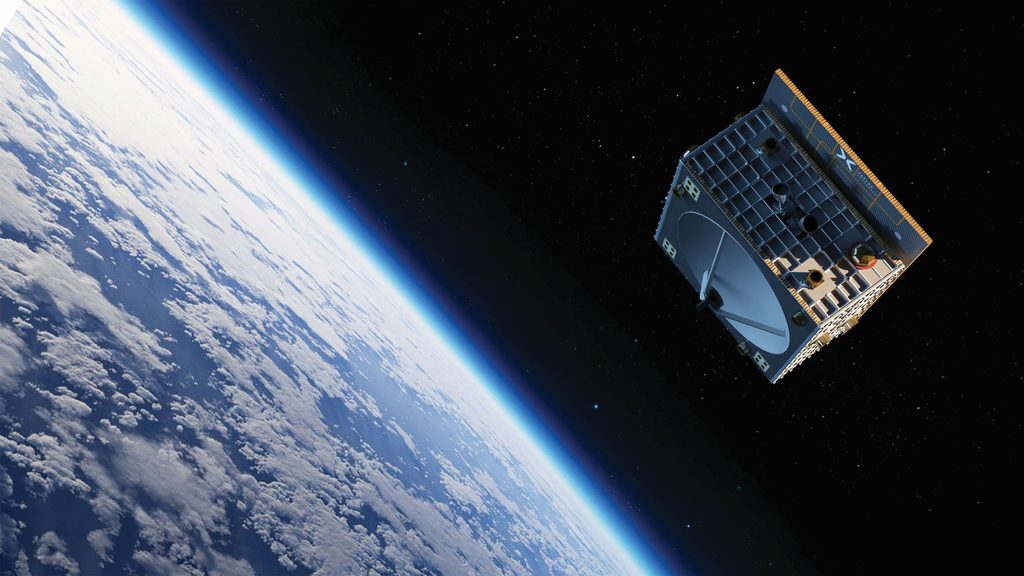
For SIGI’s communications systems, Reflex used IQ Spacecom XLink software-defined radio transceivers.
An S-band duplex link handles telemetry and telecommand – at rates of up to 1 Mb/s downlink and 128 kb/s uplink. Dual antennas provide near-hemispherical coverage in Safe Mode. An X-band transmitter, meanwhile, supports payload data rates up to 80 Mb/s, with the spacecraft actively tracking the ground station during passes.
SIGI was also designed to rely on a predominantly passive thermal control system. The satellite employs radiators, multilayered insulation and solar-panel geometry to manage heat rejection. This is supplemented by internal heaters.
Finally, the 109 kg platform structure incorporated flight-proven elements such as Advanced Cooling Technologies’ ICE-Lok wedge locks for electronics mounting.
Mission success
For its Transporter rideshare missions, SpaceX manages a highly complex pipeline, often overseeing the launch of more than 100 customer payloads in one launch. Delays are a logistical headache for private and government customers who may have been waiting months to demonstrate their technology or test their theories in space.
In the case of Reflex Aerospace’s SIGI mission, scheduling delays affecting SpaceX’s Transporter-12 gave Reflex Aerospace just the time they needed to finish developing their SIGI spacecraft. Transporter-12 was originally slated for late 2024. However, two rare anomalies on Falcon 9 launches in July and September 2024 delayed the launch to January 14, 2025.
“I must admit we got lucky,” Motzki said. “Our launch was delayed, which rarely happens with SpaceX Transporter launches. But they had some serious issues that needed fixing.” The delay ultimately gave Reflex the “time to build a better satellite, with more software ready,” Motzki explained, adding that the team only learned about it when they were “already pushing incredibly hard toward the deadline.”
The Reflex Aerospace team was able to develop, manufacture, assemble and test SIGI within 15 months. The finalised satellite, with a mass of 109 kg, was launched from a ½ slot in SpaceX’s Falcon 9 rocket fairing.
Post-separation, the satellite autonomously detumbled and reached stable Sun-pointing within 15 minutes. SIGI’s Attitude and Orbit Control System achieved pointing control errors better than 0.01°. According to Reflex, observed temperatures closely matched pre-flight simulations across Safe and Nominal modes.
At the time of writing, Reflex’s first satellite has been in orbit for over 20 months. After a year, almost all internal mission objectives were achieved. The satellite remains operational, and it is expected to stay in orbit until around 2032, when atmospheric drag will cause it to re-enter Earth’s atmosphere.
The mission served as a milestone for Reflex and its partners, including DHV Technology. According to Díaz, the company “now has real flight data backing our design, not only test data, [and] the architecture flown on SIGI has become the technological baseline for the new PCDU versions we are developing for our other customers.”
The SIGI mission successfully proved Reflex’s capabilities. The company was able to build a customised satellite within a tight 15 month window. It currently offers the service under the Praetora platform brand, formerly known as OmniFlex.

As Motzki predicted, the funding followed. In November 2025, the company secured a record-breaking €50 million Series A funding round. It also announced notable contracts including a partnership with Rafael Advanced Defense Systems for high-resolution imaging and, more recently, exclusive platform work for Orbital’s upcoming orbital data-centre constellation.
Tailoring a high-performance satellite
Reflex Aerospace leverages advanced AM techniques, such as in-process sensor embedding and machine learning correction, as well as other state-of-the-art manufacturing technologies. According to Motzki, though, these are not what sets the German startup apart from other satellite manufacturers.
“I think it’s not so much that we are applying these new technologies,” the Reflex CTO told us. “Of course, we use these modern techniques, but they are not the real game changer.” Instead, he said, it is the time the company has spent studying other special machine industries, with special emphasis on the automotive industry.
Reflex has paid careful attention to companies that apply serial manufacturing while providing highly customised products. “We’ve looked at the techniques they apply, and really thought this through instead of having a new serial manufacturing line where everything is exactly the same.”
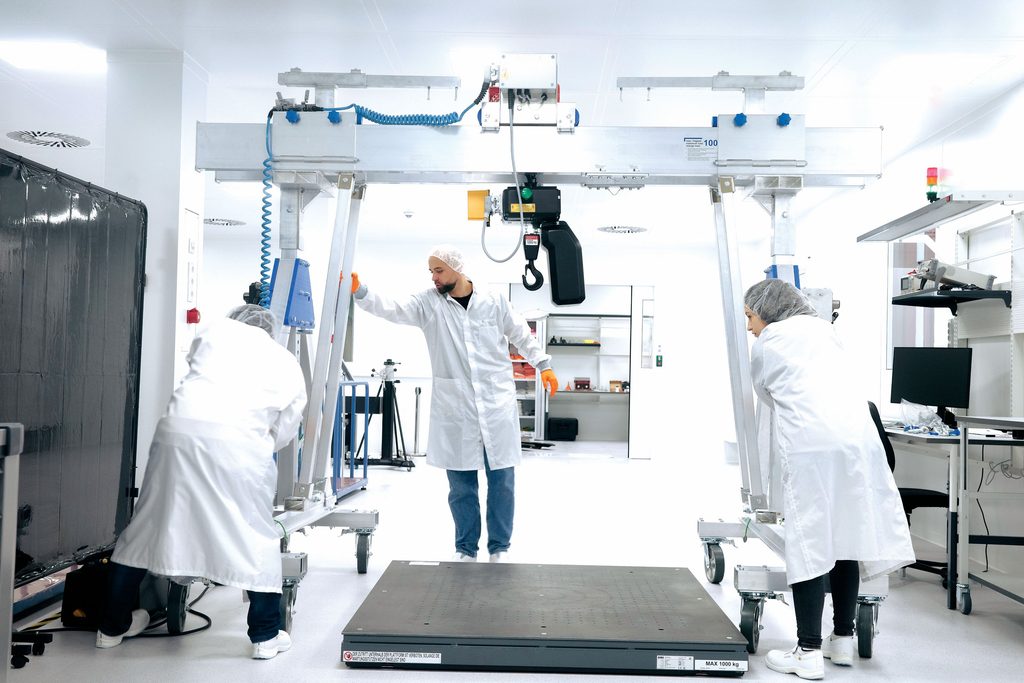
Another example Reflex doesn’t want to imitate is the classic spacecraft assembly and integration facility, where a single satellite sits in a cleanroom and is built sequentially, step by step, over a long period of time. This process is flexible for highly custom, low-volume spacecraft, but it is slow, labour-intensive and hard to scale.
In fact, rapidly manufacturing a customised satellite bus isn’t too different to building a Porsche, Motzki told us. “When you think of Porsche, no two cars they build are exactly the same,” he said. “They are all built on one manufacturing line, but customers are presented with so many options. The combinations are endless.”
Even so, Porsche’s highly flexible serial production allows it to provide customisability while operating at a substantially higher volume than many luxury brands. Translating that to satellites, Reflex builds spacecraft with highly tailored specifications – much more so than different Porsche models, Motzki said. These changes are governed by the company’s payload-centric approach.
The idea Reflex aims to implement is that “the subsystems come in and can be assembled within two weeks, and then you have a satellite. We are not there today. We are still a company that is building and growing – but we’re getting closer and closer.”

Reflex’s proprietary technologies
Although Reflex emphasises customisability, its main avionics systems stay consistent across projects. These are simply fitted and tailored to the needs of each customer. That predictability is what allows the necessary speed in design and manufacturing.
“Aside from the payload, the satellite platform consists of all the same components – so the assembly and the manufacturing need to be adapted to that,” Motzki noted, adding that, “Otherwise, when it comes to space, it is still in many ways a highly manual process.”
Knowing exactly what avionics systems it needs also allows Reflex to focus on building in-house technologies to drive down the final cost of its satellites. “We are not fully there yet, but we are on the path to manufacturing almost all the spacecraft subsystems and components ourselves,” Motzki told us.
Reflex’s in-house manufacturing strategy is based on two pillars. Firstly, building in-house allows it to be less vulnerable to any supply chain issues that may arise. This allows it to maintain its roughly 12 month delivery promise.
“If I have a PCDU with a lead time of 20 months, it’s not possible for us to use that component,” Motzki said. “If there is no proper component or comparable component available in under six months – to allow enough time for integration testing – then that is the main driver for us to do it ourselves.”
The second pillar is simply about driving down the cost of its satellites. “One key example is our onboard computer,” Motzki noted. “If we bought it, it would cost roughly a million euros. Instead, we manufacture it ourselves, and it costs €40,000. So, we would be stupid not to have done it ourselves.”
The Reflex CTO confirmed the company currently builds its own onboard computer, EPS and solar panels, and it is working on developing its own battery module. As of writing, it is outsourcing its star trackers, but it has started developing its own with integrated Sun sensors. It is also working on developing its own reaction wheels, and proprietary radios are also on its long-term roadmap.

“The idea is, if we build the majority of our components – basically we will have an avionics system that’s a closed system in the sense that we already know all the connections, the cabling and the interfaces,” Motzki explained. “Everything already works together, even if it’s not assembled to be a satellite.
“So, the payload is the only newly connected element,” he continued. “When you think about how we design a spacecraft, we put the payload in the centre. So, we’re really aiming to design a perfect spacecraft for a specific payload and its dedicated mission. Sometimes you need a small payload data handling computer and we have different versions. Sometimes you need a larger one for more memory. Sometimes you want onboard AI edge computing. Recently, we needed a very high data rate interface to the payload – something like 30 Gb/s, whereas sometimes you only need 10 Gb/s.
“After the payload, we take the other mission constraints into account, meaning we have to size the electrical power system properly,” Motzki said. “We need to understand the required duty cycle and the amount of power needed.
“Propulsion also comes into play – what kind of propulsion do we need? Electric propulsion, for example, requires a lot of power, so all of these factors interact. The power system must therefore be sized accordingly.”
Once Reflex’s design team knows the solar panel requirements for the mission, that becomes the next major constraint after the payload. Then, it moves on to designing the spacecraft.
“We develop a first idea of the overall envelope, which then allows us to determine the launcher and its envelope constraints,” Motzki continued. “This is typically Falcon 9, but it doesn’t have to be.
“Once those boundary conditions are set, we put everything together. Because we use our own components, we already know how much heat each one generates. We can decide which units need to sit on an exterior panel so they can radiate heat, and which ones should be protected from the cold and placed on the opposite side. It is essentially a matter of distributing the hardware properly.”
Rapid generative design
The flip side is that a lot of initial investment is required for Reflex to design its proprietary technologies and build out its manufacturing capabilities.
Reflex has publicly stated that a large part of its €50 million Series A funding round – the largest in the European new space sector at the time of writing, it claims – will go toward expanding its existing manufacturing capacity in Munich. The company operates from its main headquarters in Berlin, although its ‘MicroFactory’ is based in the Bavarian capital.
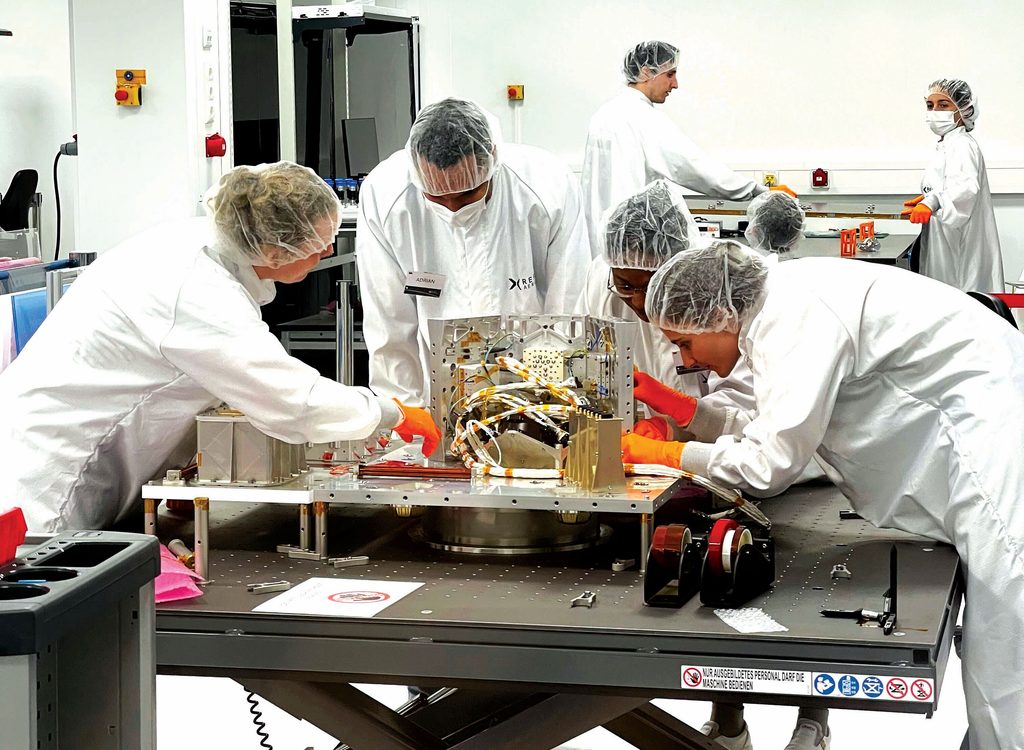
With this facility, Reflex emphasises the combination of AM and AI-enabled generative manufacturing to provide flexible production with shorter cycle times than traditional satellite plants. It aims to scale production to roughly 60 to 70 highly tailored satellites per year.
This starts with heavy reliance on simulation from the early stages, Motzki told us. The company applies ESA process milestones. Before PDR, it performs a simple structural simulation to understand whether the satellite will work without falling apart. If that initial simulation is a success, the team then moves on to a thermal simulation including data on the required orbits and the typical duty cycle.
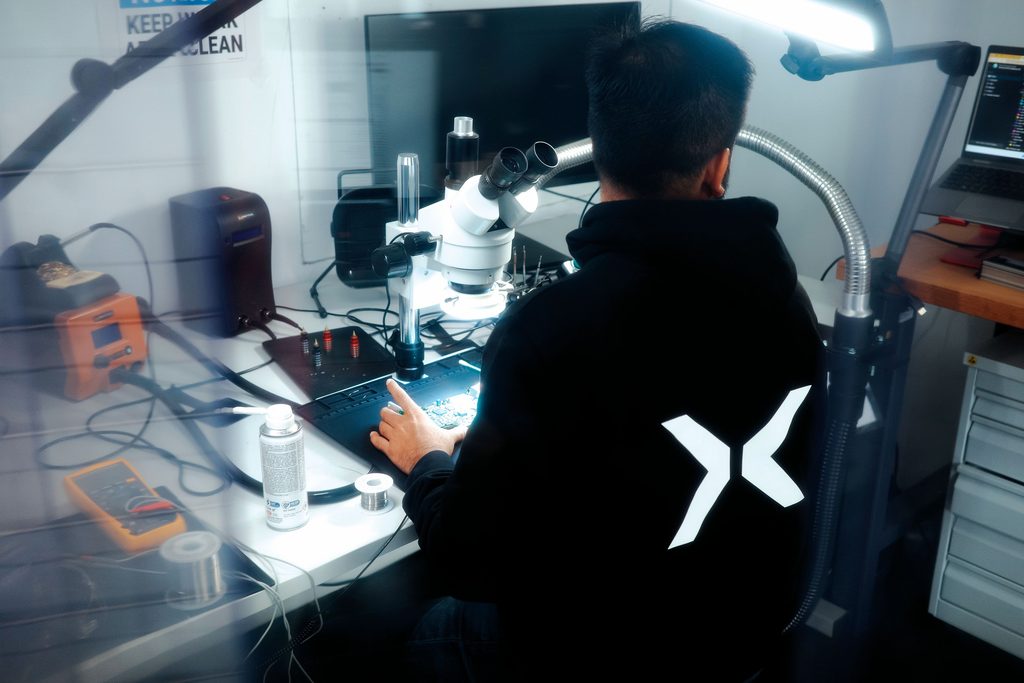
Through this iterative cycle of design and simulation, Reflex gains a reliable picture very early on. From PDR onward, the work becomes more detailed, and the company refines placements, increases the fidelity of the models and continues iterating until CDR, when it will have a complete design. As Motzki explained, as soon as the configuration looks reliable, the team kicks off manufacturing and the ordering of components.
The power of choice
Reflex’s combination of additive and generative manufacturing allows it to build high-performance small satellites within the 75–500 kg category. The company emphasises faster delivery than classic space approaches, while retaining quality and customisability. It delivers custom satellites within an initial window of 12 to 18 months – adding an additional order to an existing fleet then takes eight to 10 months.
Above all else, Motzki highlighted Reflex’s ability to make the perfect platform for a customer’s application. The customisation is the key differentiator according to the CTO, who concedes that Reflex cannot yet provide the flight heritage of legacy manufacturers.
This is reflected in Reflex’s versatile propulsion offering. Although Reflex has not disclosed the propulsion system it used for its SIGI spacecraft, it has since announced key propulsion partnerships, including a deal with France’s ThrustMe in October 2025.
“Propulsion systems are one of our strengths,” Motzki said. “Depending on the mission, propulsion demands are different. If it’s an Earth observation mission, then electric propulsion is perfect. You maintain your orbit and that’s it.”
ThrustMe’s JPT150 propulsion system is designed precisely for that role. It is the first low-power iodine-fuelled Hall-effect thruster, and is set for its in-orbit debut on Reflex’s MIRI (or MarbleSat-1) satellite designed for Marble Imaging.
The fully integrated system – combining thruster, iodine-compatible cathode, solid propellant storage, flow control, power processing and software – operates below 250 W and delivers roughly 4–12 mN of thrust with specific impulse up to 2000 s. The solid iodine eliminates the need for high-pressure tanks, cutting costs and volume compared with xenon. It also simplifies handling prior to launch.
For the MIRI mission, Reflex is developing a ~145 kg very-high-resolution Earth observation satellite. During the mission, the JPT150 will perform orbit raising, stationkeeping and collision avoidance in a 500 km SSO. According to Reflex, the JPT150 to be used on MIRI was delivered in July 2026 and it is now in integration. The company is targeting a launch in the first quarter of 2027.
Additionally, in June 2026, Reflex announced a partnership with Spain’s Arkadia Space. Under the agreement, it will integrate Arkadia’s green propulsion technology into an undisclosed upcoming mission. That mission – the first to integrate chemical propulsion on one of Reflex’s platforms – will fly a LEO satellite with a launch mass of roughly 200 kg.
Arkadia will provide a customisable hydrogen peroxide propulsion system designed for orbital manoeuvres and end-of-life deorbiting. It features the company’s proprietary TRITON 5N monopropellant thrusters that run on high-test hydrogen peroxide (HTP) and deliver a specific impulse of 180 s, along with 7 L propellant tanks and flight electronics. All of these were built in-house and the technology was validated by Arkadia’s DARK propulsion module on a 2025 D-Orbit mission lifted to LEO by SpaceX’s Transporter-13.
“The mission that we’re doing with Arkadia is more about close proximity manoeuvres,” Motzki said. “We needed something that has a lot of delta-V, and electric propulsion could not deliver that. So, part of our strength is that we can accommodate any kind of payload, and we can accommodate any kind of propulsion system.
“So, if we only need stationkeeping, we choose a propulsion system that is only for stationkeeping; if we need to do trans-orbit transfer manoeuvres, we choose the perfect propulsion system for that application. If I have lifetime requirements that go far beyond five years, we need a propulsion system that is perfect for that and so on.”
MIRI and beyond
Reflex’s rapid manufacturing approach will bring challenges, whether stemming from the supply chain or evolving mission demands. The Reflex team was lucky when it came to that last-minute Transporter-12 delay, which allowed more time to develop their platform. However, its upcoming MIRI mission presented a less fortunate mission alteration when the customer, Marble Imaging, had to change the payload completely.
Motzki calls this by far the “biggest challenge” on that mission, stating that “the customer changed the primary payload a year into the program. So that triggered a complete redesign. Of course, for the engineers, that was frustrating.”
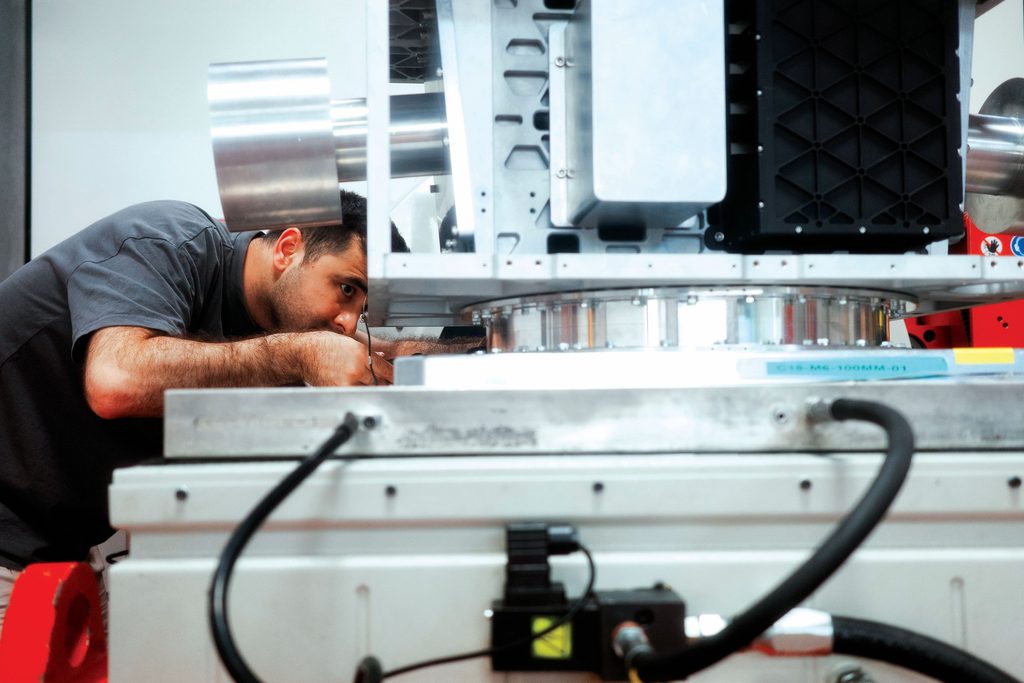
He continued, “Ultimately, though, our concept is to be flexible. With more rigid engineering you would have basically started from zero, whereas we could reuse most of our components, though we did have to redesign the satellite bus.”
Reflex Aerospace is working hard toward its upcoming missions. The two closest to launch are MIRI, which is targeting a Q1 2027 launch, and the Arkadia Space mission with the undisclosed customer, which could fly in Q2 aboard SpaceX’s Transporter-20 rideshare mission.
Beyond that, Reflex has also recently announced missions with Umbra, Rafael Advanced Defense Systems, LiveEO and Orbital. “We are working on five spacecraft at the moment in parallel,” Motzki confirmed.
Would such tailored precision lend itself to mega-constellations? Reflex’s latest update, at the time of writing, is a partnership with Los Angeles-based Orbital. The September announcement marks its first customer in the US and a move towards building orbital data centres. According to Reflex’s announcement, the company will lead the design of the satellite bus platform for Orbital-1 and the constellation that follows.
In our first conversation, prior to the announcement of the Orbital partnership, Motzki revealed he was reticent to work on mega-constellations, citing the fact that he sees them as a winner-takes-it-all market. In a follow-up, the Reflex CTO said he could not reveal a great deal about the partnership, as “the whole project and final manufacturing concept is still in an early stage.” However, he did state that Reflex will serve as a design partner for Orbital. This means “we will develop the spacecraft but most likely will not manufacture the constellation in our facilities.”
Details are still to be ironed out. Either way, Motzki’s engineering team will have their work cut out. As Reflex noted in a statement, Orbital-1 will take on “the hardest problems in orbital compute: rejecting hundreds of kilowatts of heat continuously and passively to deep space, generating and distributing power from solar arrays far larger than any commercial satellite flying today, and designing the spacecraft from day one to be built in volume rather than as a one-off.”
Separately, Orbital has revealed that it aims to build a mega-constellation of up to 100,000 satellites. Where it is built will be a determining factor in Reflex’s future plans.
Even before his time with Reflex, Motzki was no stranger to the rigours of space deadlines. Prior to joining as VP of engineering in 2023, and being promoted to CTO the following year, Motzki spent nearly two decades moving from medical imaging labs to working on laser links in space for Mynaric and Earth-observation constellations for Satellogic.
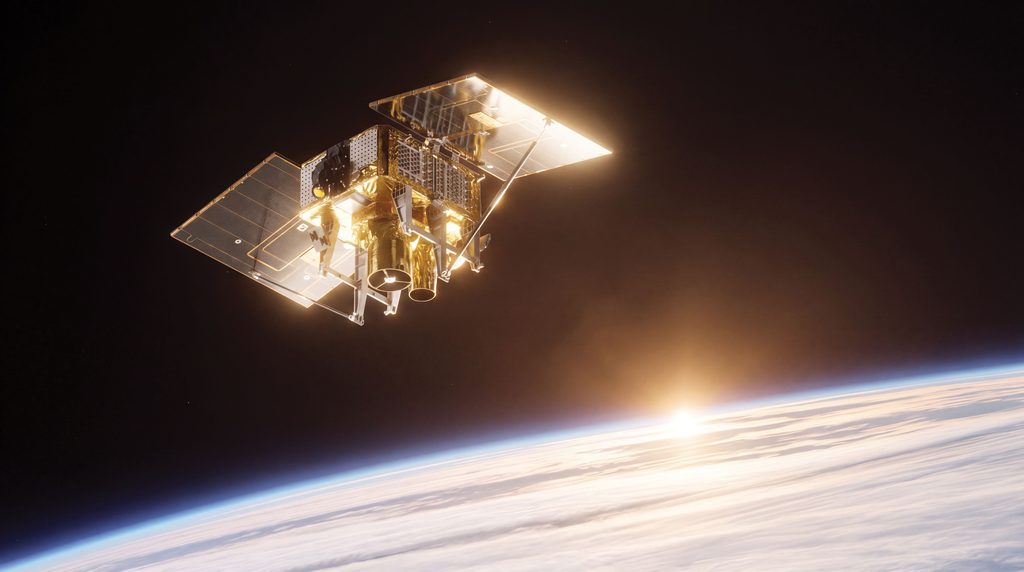
“Now it’s almost my 20 year work anniversary,” Motzki told us. “Twenty years in engineering technology, and this is by far the most talented engineering team I’ve worked with. After 20 years in different companies, I can tell you that this is by far the biggest reason for our success. Not the idea behind the company, not the tools we built and not the processes we built. It’s that we managed to get such a great group of people together to do it.”
UPCOMING EVENTS