Space Tech Expo USA and Small Satellite Conference
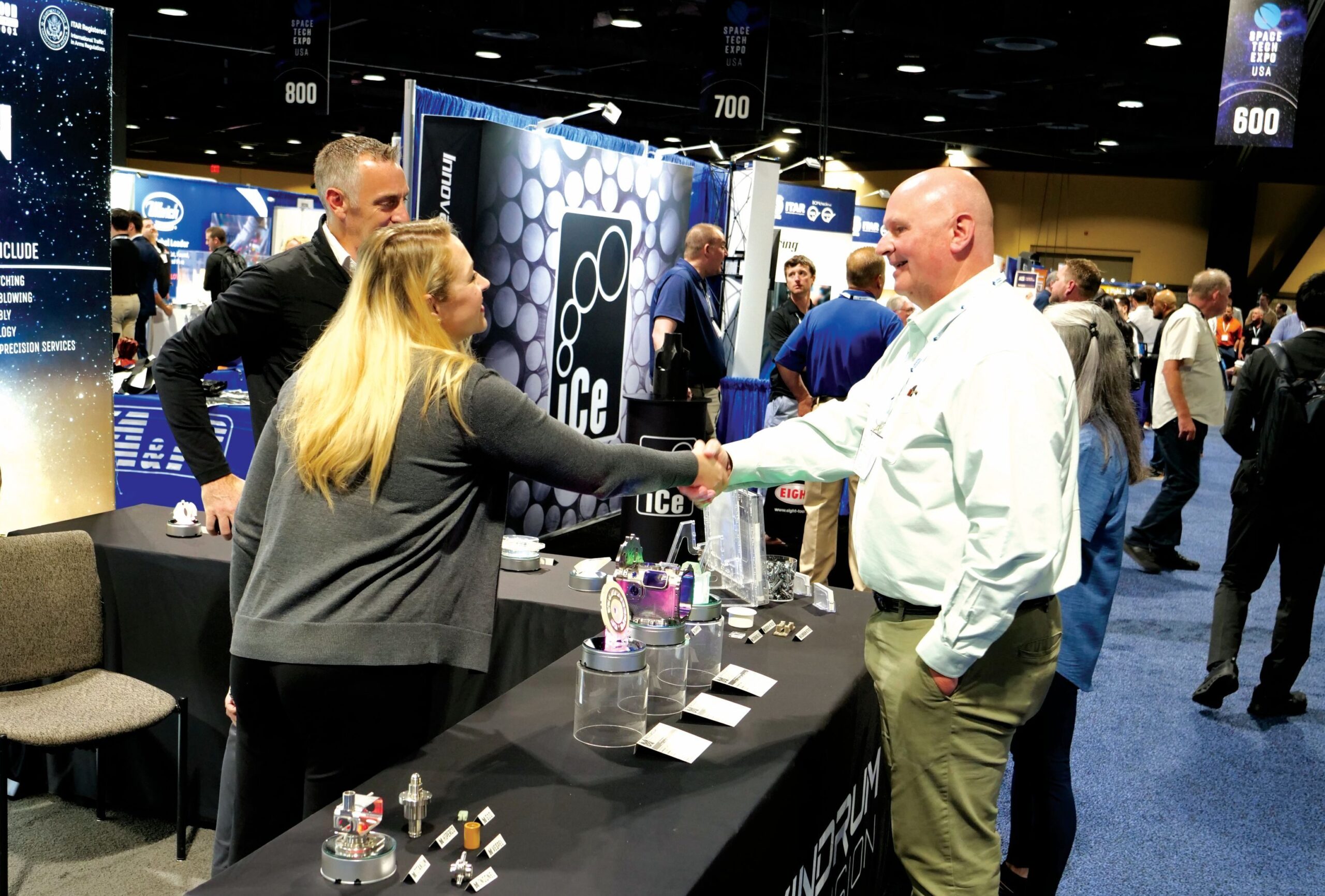
(Image: Space Tech Expo USA)
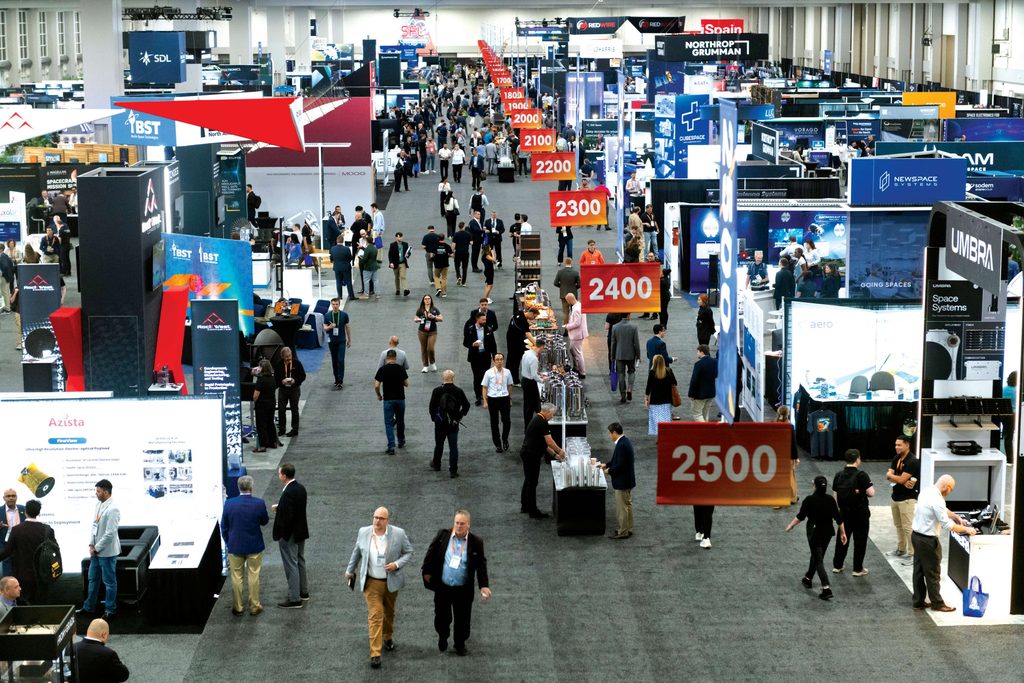
(Image: Small Satellite Conference)
Big space, bold plans
Space Tech Expo USA, this year held at a bigger and brighter venue, and the milestone 40th annual Small Satellite Conference were unmissable events for suppliers, manufacturers and New Space startups with a focus on satellite tech both big and small. Peter Donaldson reports
Two recent important events – the Space Tech Expo held at the Anaheim Convention Center in California from June 2 to 4, and the Small Satellite Conference at the Salt Palace Convention Center in Salt Lake City, Utah, from August 23 to 26 – showcased a number of important developments in key technologies including: thermal protection, dissimilar metal bonding, fasteners, solar arrays, short-wave infrared (SWIR) sensors, protective cover glass and accelerometers.
Amorim presented its long-proven cork-based thermal protection materials at Space Tech Expo, discussing how the company is engineering its products to address emerging market requirements, including reusable launch vehicles, fully bio-based thermal protection systems (TPS), and increasingly complex vehicle geometries.
A key focus is the adaptation of cork-based TPS to reusable launch systems. Ablative materials provide thermal protection by absorbing, dissipating and removing heat through controlled material degradation during atmospheric re-entry or exposure to high-temperature gas flows. As the outer surface undergoes erosion, the underlying structure remains protected from extreme thermal loads.
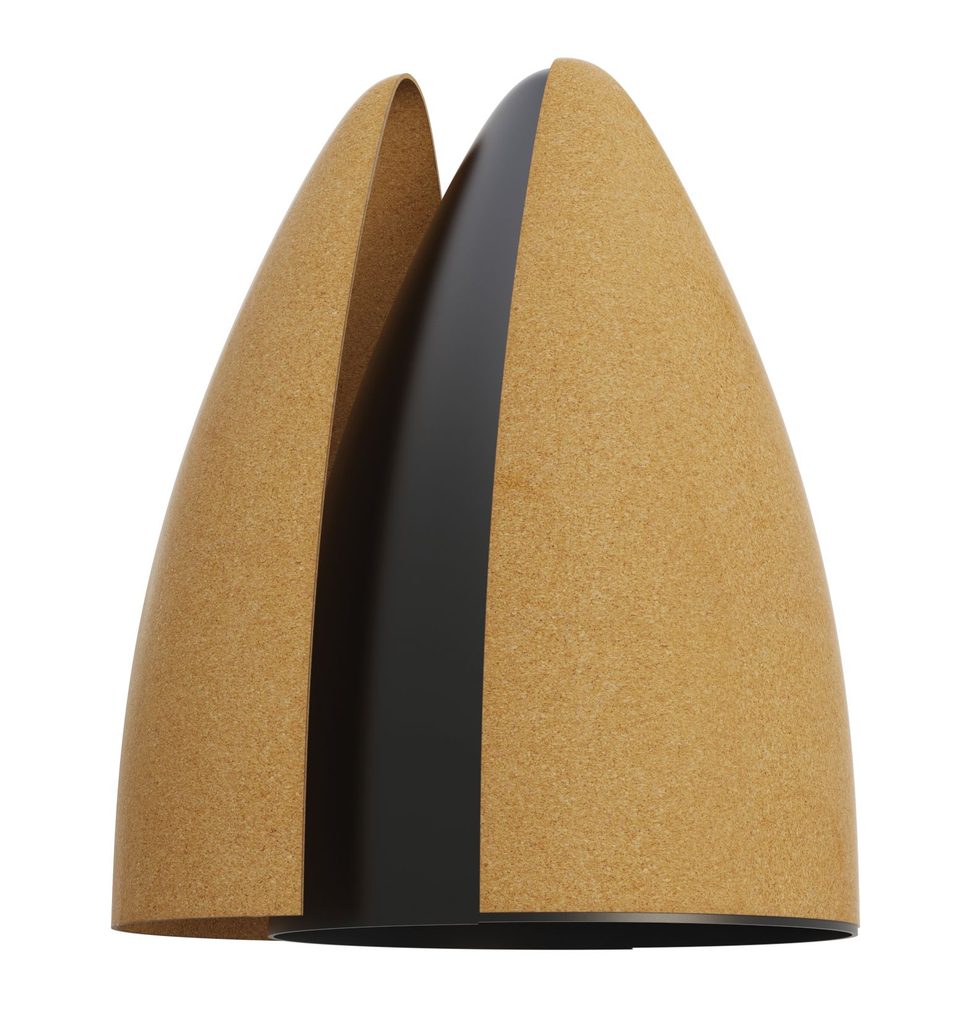
While ablative TPS are not inherently reusable, reusability can be achieved by replacing or refurbishing the ablative layer during vehicle maintenance. “Reusability changes the way thermal protection systems need to be designed, evaluated and maintained,” says Sofia Paixão at Amorim Cork Solutions. “With the development of moulded TPS solutions and involvement in the SALTO Project with the modular tiles concept, Amorim has been redefining the maintenance approach for thermal protection systems, enabling faster replacement procedures, reducing labour time and minimising vehicle turnaround between missions.”
The SALTO project has also driven the development of 100% bio-based TPS, reducing reliance on synthetic phenolic resins traditionally used in composite TPS materials, including cork-based formulations. “Amorim’s solution has reached an advanced stage of development and is already available for commercial applications,” says Jonathan Bluhm at Amorim Cork Solutions. “Industrial-scale manufacturing trials have also been successfully carried out.”
In addition, the company is addressing the growing complexity of launcher and capsule geometries through its mouldable P50 material, which is a cork phenolic composite material designed to protect launch vehicles during ascent and capsules during re-entry. According to Paixão, moulding enables cork-based TPS components to be produced in complex geometries and closer to their final shape, simplifying downstream machining, reducing material waste and facilitating system integration.
Atlas Technologies presented its dissimilar metal bonding capabilities at the Small Satellite Conference, capabilities that enable it to combine contrasting but complementary properties of metals such as aluminium, stainless steel, copper, titanium and niobium in pairs for a variety of space-related applications that require components to withstand extreme temperature transitions over short distances or hold the highest levels of vacuum. The strong, corrosion-resistant metal bonds suit applications for which alternatives such as fasteners, welds or adhesives would be unsuitable.
As Mel Janecka at Atlas Technologies explains, the company machines bimetal components “to allow a combination of multiple dissimilar and often conflicting metal properties in one fitting, transition or flange.” Atlas works closely with customers to calculate bond-line geometries and interlayer materials that optimise molecular bonds for each specific mission requirement.
For example, Atlas recently manufactured niobium/stainless steel transition rings to connect stainless steel rocket thruster heads to niobium alloy nozzles for Benchmark Space Systems. This junction must manage a temperature difference of over 2000 degrees across a span smaller than 0.5 in. While the entire system could have been made from niobium, the bimetallic bond allowed the more expensive material to be used only where it was really needed.
Final products are vacuum leak tested to ultra-high vacuum (UHV) or extreme-high vacuum standards, with typical products passing at <1 x 10⁻⁹ cc/s He – the recognised UHV benchmark. For space applications where hermeticity is non-negotiable, this provides measurable assurance.
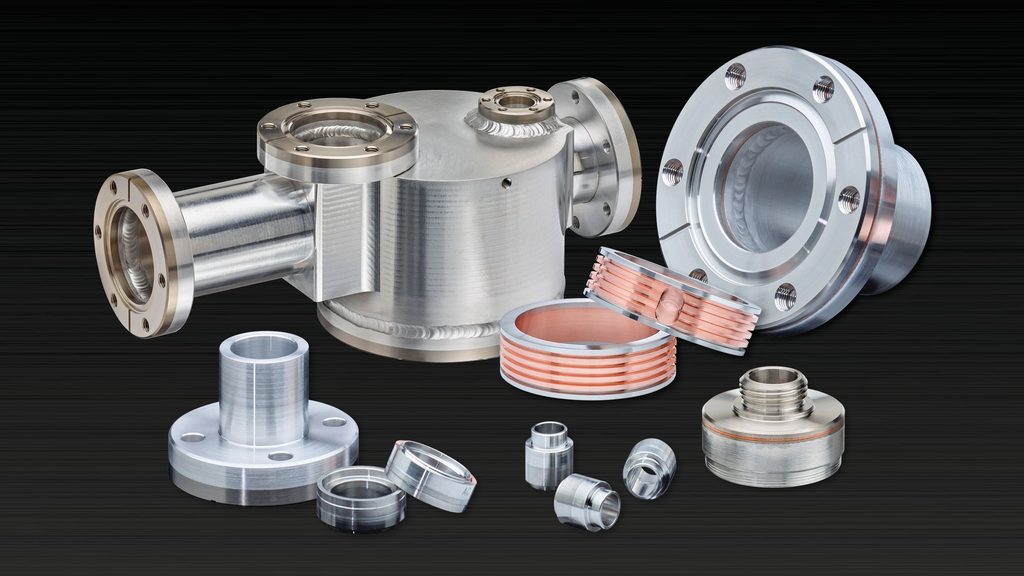
Explosion bonding, one of the core processes, creates a plasma that forms wavy bond lines at the interface. These waves are deliberately manipulated through process variables to increase surface contact area. As Janecka notes, this results in “a stronger bond interface with increased fatigue resistance” – critical for components enduring launch vibration and repeated thermal cycling. “Every bonded plate is ultrasonically tested to verify complete bonding across the entire surface, ensuring no hidden voids or unbonded regions, prior to machining.”
Atlas also manufactures custom aluminium and titanium vacuum chambers for atmospheric testing, particle accelerators, quantum computing and semiconductor manufacturing. Aluminium’s low hydrogen content and superior thermal conductivity enable faster bake-out and reduced contamination; titanium supports extreme-high vacuum and ultra-high purity applications.
Bright Ascension discussed its model-based, end-to-end approach to software development at Small Sats. The company points out that space software has long been built in separate ‘boxes’, by separate teams, under separate contracts, with interface control documents holding the arrangement together. The model-based approach is designed to dissolve those boundaries – and its work on the OS-VOLT mission serves as an illustration.
OS-VOLT, a 16U CubeSat carrying quantum optical payloads and a high-performance data processing unit, launches in 2026. It combines spacecraft development and operations with specialised payload and downstream data services – precisely the kind of complexity that fragmented architectures handle badly. Bright Ascension’s HELIX line describes the entire mission through a common model capturing physical characteristics, functional behaviours and mission context, providing a single source of truth rather than independently configured subsystems.
“Rather than treating flight and ground software as completely separate systems, HELIX provides a single source of truth to maintain consistency between the components and interfaces across the mission,” says Peter Mendham, founder and CTO.
The architecture’s component-based design also addresses hardware integration. Rather than redesigning flight software for each new payload, hardware-specific functionality is integrated through well-defined services – allowing third-party hardware such as KP Labs’ Leopard DPU to slot in without disturbing the wider architecture. Its core capabilities are portable, reusable components.
A change to a spacecraft model can propagate through the software environment automatically, keeping flight and ground components aligned without separate teams manually implementing the same change twice. HELIX’s shared model replaces cumbersome interface control documents, limiting the damage done by differing interpretations across teams.
“That continuity across flight and ground is a key differentiator for HELIX,” Mendham says. “Rather than treating integration between separately developed software components as a problem to be solved at the end of the process, we build the continuity into the software development model from the outset.”
Downstream, HELIX treats data delivery as a ‘first-class citizen’ rather than an afterthought interface layer – critical for OS-VOLT’s climate resilience data and anchor customers like the Resilience Constellation. The model is already supporting assembly, integration and testing, including hardware-in-the-loop testing, with reusable test and operations procedures captured directly in the model. That, Mendham argues, reinforces a develop-as-you-fly approach. “Even with the first iteration of a mission, this reduces commissioning time, but when applied at scale, the model-based and reusable characteristics of HELIX really demonstrate their value.”
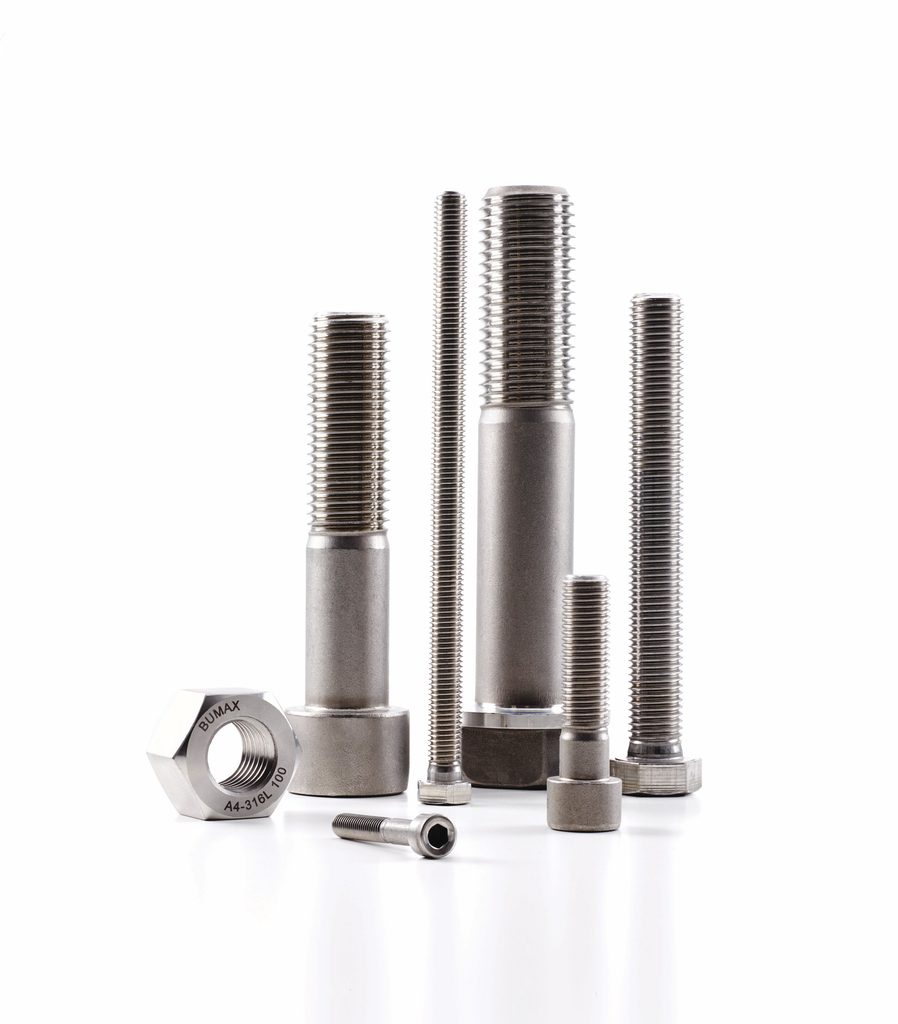
BUMAX AB presented its high-performance stainless steel fasteners for space-sector applications at Space Tech Expo. Space hardware may have to withstand high mechanical loads, launch vibration and shock, vacuum and significant temperature changes. Andrew Gadzic of BUMAX says reliable clamping depends on the material grade and surface condition, together with a properly designed and controlled installation process.
He emphasises that specifying a generic fastener standard may leave some application-critical variables undefined. “Standards normally establish dimensions, tolerances and minimum material and mechanical property requirements, but critical applications may also require tighter controls on material chemistry and cleanliness, full heat and production lot traceability, a defined manufacturing route and surface condition, controlled lubrication and lot-specific test documentation.”
In a typical torque-controlled installation, most of the applied torque is used to overcome friction in the threads and beneath the rotating bolt head or nut. Generally, about 40% may be consumed by thread friction and 50% by bearing-surface friction, leaving only around 10% to advance the thread against the axial load. Actual proportions vary with thread geometry, bearing diameter, lubrication and surface condition. Consequently, small variations in friction can produce significant differences in bolt tension for the same applied torque.
After tightening and before an external service load is applied, the tensile force in the bolt is balanced by an equivalent compressive force in the clamped components. This initial force is known as preload.
If preload is too low, the joint can separate or slip, increasing the risks of vibration-induced loosening, fretting wear and fatigue failure. If preload is excessive, the fastener may yield, threads may be damaged, or the clamped components may be crushed or indented. “Achieving the required preload therefore depends on the complete fastening system, including the externally threaded fastener, nut or tapped hole, bearing surfaces, lubricant or coating, tightening method and tool control.”
Stainless steel joints can also be susceptible to galling, a severe form of adhesive wear caused by high contact pressure and sliding motion. Galling can consume tightening torque unpredictably and prevent the intended preload from being achieved. BUMAX reduces these risks through tightly specified and traceable stainless steels, controlled manufacturing processes, and cold forging and thread rolling where applicable.
Some BUMAX grades also receive a factory-applied lubricant to reduce galling and improve friction consistency. For vacuum or contamination-sensitive space hardware, however, the lubricant, coating, cleaning and packaging processes must be selected and qualified for the particular application. Where conventional lubrication is unsuitable, application-specific surface treatments may be used.
MicroLink Devices discussed at Small Sats the solution it offers to the growing shortage of solar cells for spacecraft. The proliferation of LEO satellite constellations has created a level of demand for multi-junction germanium solar cells that suppliers cannot scale up to meet. Such cells have powered spacecraft for decades, but the thousands of small satellites now being built depend on germanium that is becoming scarce and the object of geopolitical restrictions. Into that gap, MicroLink is positioning a gallium–arsenide-based alternative using material-saving epitaxial lift-off technology, according to Ray Chan at MicroLink Devices.
GEO satellites – a handful per year, high orbit, high value – were comfortably served by an established supply chain, but the shift in focus onto LEO constellations with hundreds to thousands of units is stressing that chain beyond capacity. The fallback, silicon, is lower-performing and heavier, forcing oversized satellite designs to compensate. Meanwhile germanium prices are climbing, with cost passing down through cell makers, panel makers and satellite manufacturers. Gallium, although less constrained and available from multiple vendors, sits on the same restricted materials list.
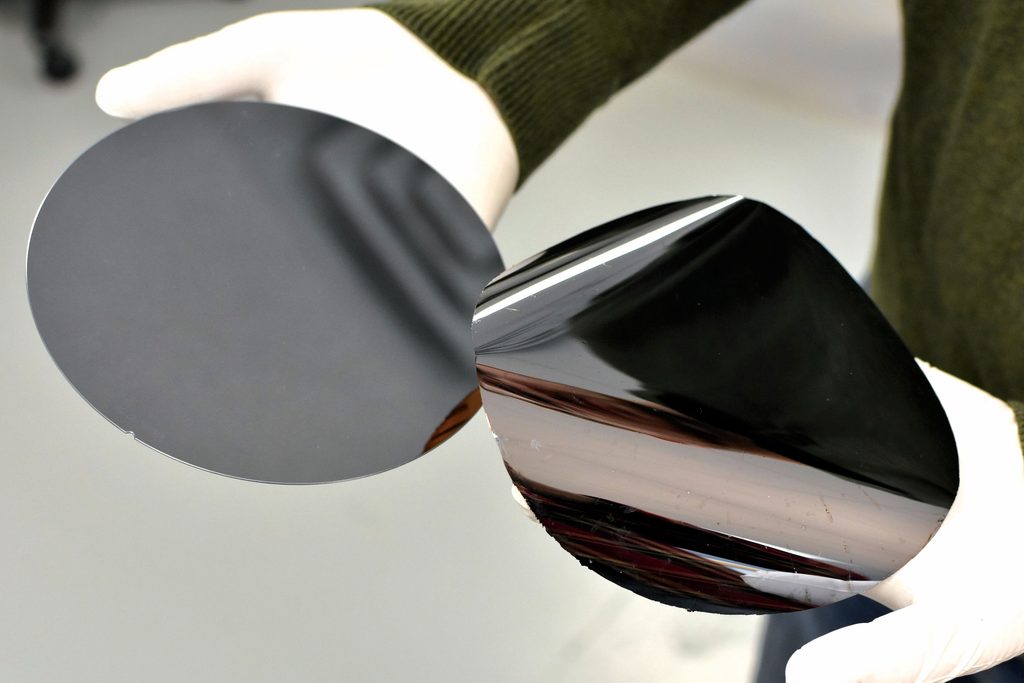
MicroLink’s approach retains the high-performance multi-junction architecture but changes the substrate economics. Starting with a gallium–arsenide substrate, the company grows the cell structure and then peels the semiconductor off the substrate, which is reused rather than consumed. Chan emphasises that the resulting cells perform comparably to their germanium counterparts – the subcell structures are very similar – with conversion efficiencies exceeding 30% and the best cells reaching 32% or more, delivered in a lightweight, flexible format.
The technology is not new: it has been in development for almost two decades and is already flying on Airbus/AALTO’s Zephyr solar-electric aircraft. For space, MicroLink produces modules – rather than the traditional single cell plus coverglass – that tile onto satellite solar wings, fitting established integration procedures. Coverglass-free options are also under development, addressing another constrained supply line.
Space qualification is now underway and principally addresses thermal cycling: a LEO satellite completes roughly 16 orbits daily, accumulating tens of thousands of cycles over a five-to-seven year mission. With support under US government programmes, several MicroLink module samples are already in orbit for evaluation. Early feedback is encouraging, with cells behaving as expected relative to germanium benchmarks, Chan reports.
New Imaging Technologies (NIT), now part of Lynred, showed its indium–gallium–arsenide SWIR sensors at Space Tech Expo. These operate in the 0.9–1.7 µm waveband of reflected light that penetrates the atmosphere and obscurants well, suiting the sensors to many applications in Earth observation and monitoring, space domain awareness, laser communication and planetary science.
While full space qualification of NIT’s SenS 1920 (Full HD) and WiDy SenS 320 camera modules is not the company’s immediate goal, radiation testing of their encompassed NSC2101 and NSC2001 sensors is underway, with results due by late 2026. “Current results are encouraging,” notes François Coursaget at NIT. For some LEO applications, the existing robust modules can be used or adapted to customer specifications, and NIT is collaborating with a partner developing fully space-qualified modules for its sensors.
The acquisition by Lynred has accelerated NIT’s space capabilities, particularly in qualification processes and radiation analysis, Coursaget adds.
For onboard processing, NIT takes a flexible approach. While offering 8-bit compression, the company advocates for non-embedded raw 14-bit data modules to minimise power draw, allowing customers to implement proprietary processing. For optical communications and tracking, the cameras deliver very low latency (less than the time it takes to capture and read out one complete frame) and support instant windowing, explains Coursaget, achieving frame rates above 10,000 Hz with regions of interest down to 16 x 16 pixels with a wide dynamic range and high sensitivity.
Nippon Electric Glass (NEG) presented Starveil, a new type of ultra-thin cover glass engineered to protect solar cells for satellites and other space-based equipment from the harsh ultraviolet environment of orbit with minimal impact on power generation, for example.
Presented at Space Tech Expo, this glass offers high UV shielding, effectively blocking harmful UV-C to UV-B radiation that can degrade solar panel performance. As NEG’s Hiroki Kobayashi explains, the material allows through the “longer wavelengths, like 350 to 400 nanometres, which can be used by the solar cells to generate power,” while cutting damaging short-wave UV. This helps extend mission life.
In addition to its selective UV shielding performance, Starveil glass also resists particulate radiation in the form of high-energy protons and electrons, supporting satellite operations in LEO, MEO and GEO.
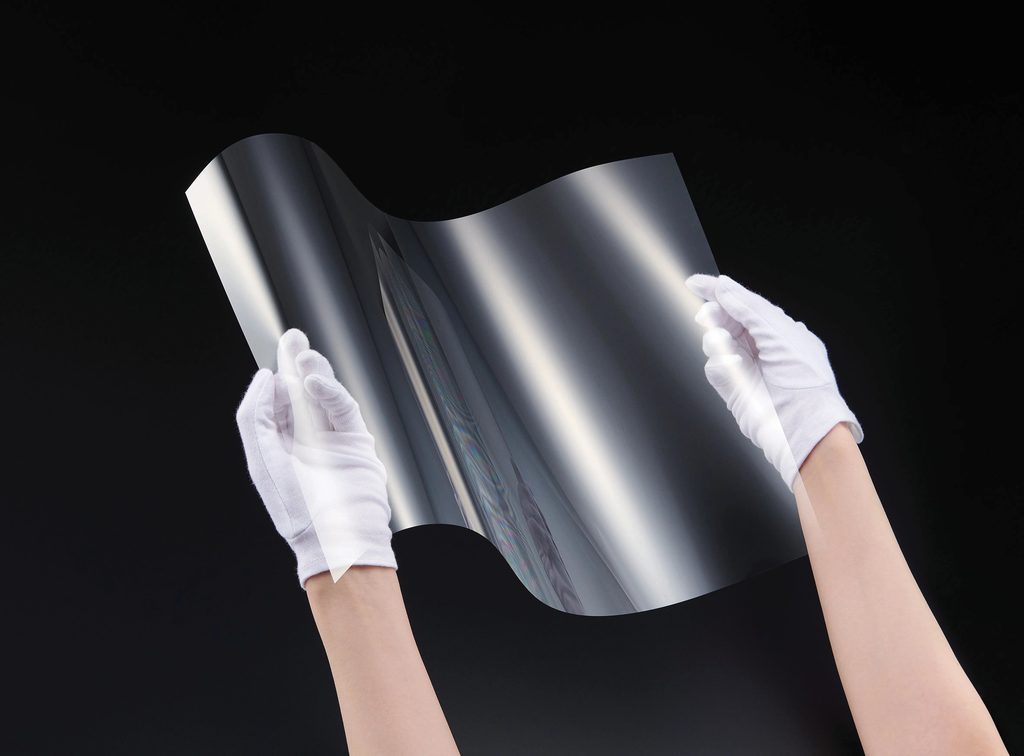
A key engineering challenge was achieving extreme thinness without compromising durability. NEG has developed production technology over nearly two decades to control thickness and produce large sheets without breakage, offering thicknesses down to 30 µm – thinner than a human hair. At 100 µm in thickness, the glass weighs approximately 246 g/m², a significant weight saving for cost-sensitive launches.
Crucially, the glass derives mechanical robustness not from its standalone strength, but from being laminated directly onto the solar cells. “The glass itself is fragile,” Kobayashi says, but “once it is adhered, you don’t need to have much concern about that,” as the laminate structure provides resilience against the launch environment. The glass is available in large sheets up to 800 x 2000 mm, helping to minimise manufacturing steps and improve productivity, and a variant available in roll form is under development.
Specialty Coating Systems (SCS) discussed its parylene protective coating materials for spacecraft electronic components and materials at Small Sats. One of the persistent threats to reliability that such coatings counter is the formation of tin whiskers in lead-free electronics. Recent orbital testing has shown that parylene conformal coatings suppressed whisker growth on the ISS/Kibo ExHAM experimental platform over four years. Uncoated tin-plated samples developed numerous long whiskers, while parylene and polyurethane-coated samples showed no penetration. Critically, parylene’s hardness and Young’s modulus showed no significant degradation, and orbital results matched ground controls.
“The four-year result is better viewed as an orbital validation point than as a hard lifetime limit,” says Tim Seifert, at SCS. Earlier terrestrial studies reported no whisker activity for 5.5 years at 50 °C/50% RH, and polyurethane coatings contained whiskers for up to 23 years. A 10–15 year qualification case is technically plausible, but it must be built as a degradation and containment program – qualifying the actual electronic package, including coating thickness, surface preparation, adhesion method, tin finish chemistry, component geometry, solder system and cleaning or rework steps.
Adhesion is central to that effort.
SCS offers A-174 silane for many metals, glass and plastics, plus its proprietary AdPro adhesion-promotion family for difficult substrates such as titanium, stainless steel, gold, chromium, solder mask and polyimides. “This is relevant to COTS boards because their surfaces aren’t necessarily the relatively well-characterised materials used in traditional space hardware and can combine many different materials,” Seifert notes.
Optimal adhesion prevents the coating from lifting locally as a growing whisker pushes against it. “In addition, we’ve observed that vacuum annealing parylene can increase cut-through resistance, hardness and abrasion resistance by increasing density and crystallinity.
SCS also offers ParyFree, a halogen-free parylene variant with a low dielectric constant and dissipation factor, suited to next-generation communication equipment.
Against combined space stressors such as atomic oxygen erosion, vacuum, UV radiation and thermal cycling, SCS leverages longstanding NASA Goddard outgassing testing and an EPFL partnership on ALD+parylene multilayers, where an inorganic ALD layer acts as an environmental barrier while parylene supplies conformality and mechanical compliance. For small satellites and additively manufactured parts, ALD+parylene deposits 1–10 µm multilayers at near-room temperature, combining dense barriers with 3D conformity – moving parylene from protective polymer to multifunctional surface engineering.
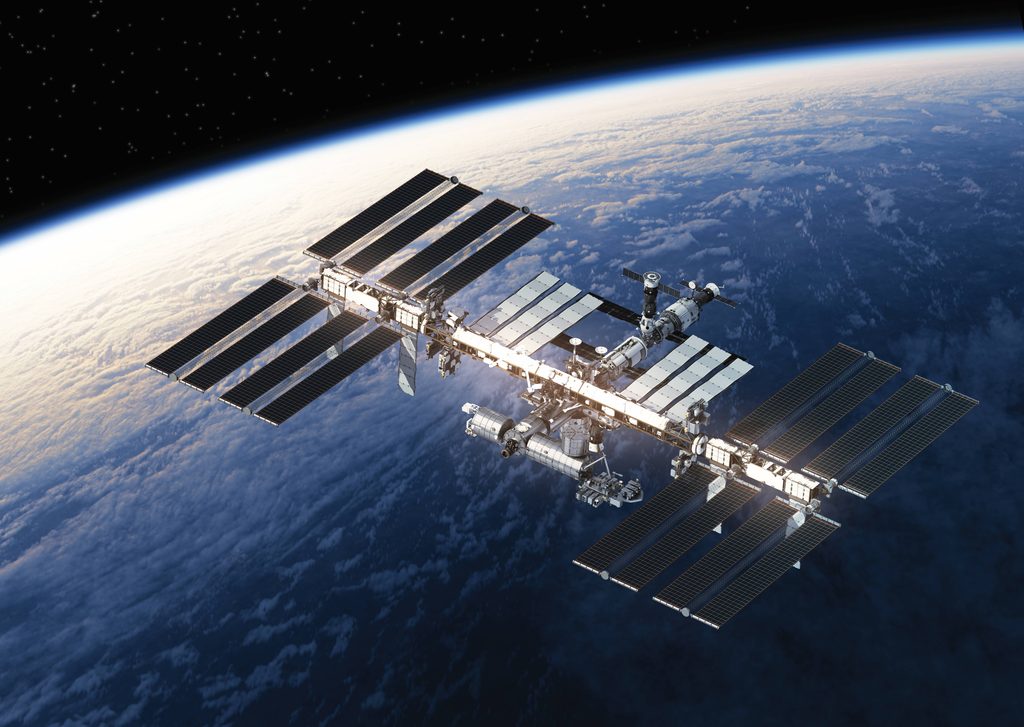
SCS’ flight heritage spans a range of proven applications, including parylene-coated components on NASA’s Juno spacecraft, the International Space Station and JAXA’s Hayabusa2.
Silicon Designs Inc (SDI) showed its capacitive MEMS DC accelerometers at the Small Sats event, including the tactical-grade Model 1527. Capable of measuring down to zero hertz, the accelerometers capture dynamic acceleration from thrust changes and vibration, as well as sustained acceleration from gravity and tilt. They can also measure 0 g during freefall. This gives them an important advantage over piezoelectric AC accelerometers in applications requiring static or very-low-frequency measurements. Across its product families, SDI offers several performance grades and eight full-scale measurement ranges from ±2 to ±400 g.
SDI emphasises that its accelerometers can measure sustained acceleration and low-frequency structural response, along with vibration within each sensor’s flat frequency response. This is particularly useful in qualification testing, where engineers may need to separate vehicle motion or static loading from vibration, according to Kati Cole of SDI.
All accelerometers have some inherent bias, and that bias can change with temperature and over time. SDI reduces these changes through its symmetrical variable-capacitance design, as John Cole, SDI’s founder and president, explains. “The sensing element uses two mirror-image silicon wings, allowing many temperature-related and other common sources of error to cancel each other out. The silicon construction and very small amount of mechanical movement also help the sensor remain stable over time.”
The MEMS element is paired with a custom-designed application-specific integrated circuit (ASIC) that converts tiny changes in capacitance into a stable, low-noise differential output. The MEMS element and ASIC are hermetically sealed inside a rigid ceramic package. SDI individually tests, calibrates and characterises each inertial-grade accelerometer and supplies a detailed test report documenting its measured performance.
Electronics used in space may be exposed to ionising radiation, which can affect their performance. To evaluate the radiation tolerance of the Model 1527J-025 tactical-grade accelerometer, SDI conducted total ionising dose testing using gamma radiation. Groups of devices received total doses of 10, 25, 50, 100, 200 and 350 krad(Si) at a dose rate of 348.45 krad(Si)/h. Each device was tested before and after exposure for bias, scale factor, linearity, frequency response, current consumption and performance over temperature.
“All units remained functional and met our performance requirements after exposure,” Cole says. “Bias, scale factor, linearity and frequency response were generally unaffected, even at 350 krad(Si).”
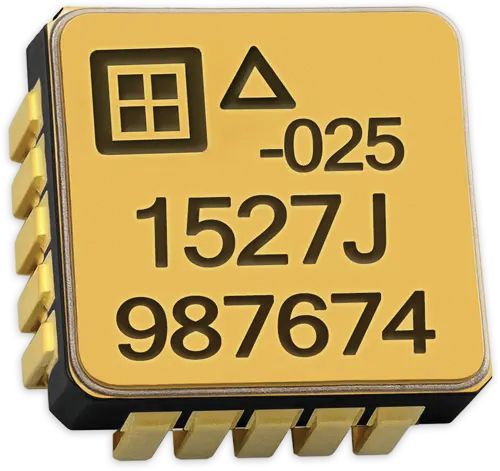
In addition to the tactical-grade 1527, SDI offers industrial-grade accelerometers in ±2 and ±5 g measurement ranges. These lower-range devices are rated for mechanical shocks up to 2000 g peak for a 0.1 ms pulse, while SDI accelerometers with measurement ranges of ±10 g and above are rated up to 5000 g peak. That shock resistance comes from the MEMS structure itself, Cole explains. “Each silicon wing is extremely small and light, and is suspended on torsion bars. The geometry and damping are optimised for each acceleration range, helping to control its movement and allowing the sensor to settle quickly after a shock.”
Piezoelectric accelerometers generally offer higher bandwidth and may be better suited to the highest-frequency acoustic or random vibration measurements, Cole notes. However, when the frequencies of interest fall within the MEMS sensor’s flat response, SDI’s accelerometers can capture low-noise vibration data along with the DC and low-frequency information that piezoelectric sensors typically do not provide.
UPCOMING EVENTS