



The solar cell that powered Ingenuity on Mars gets an upgrade
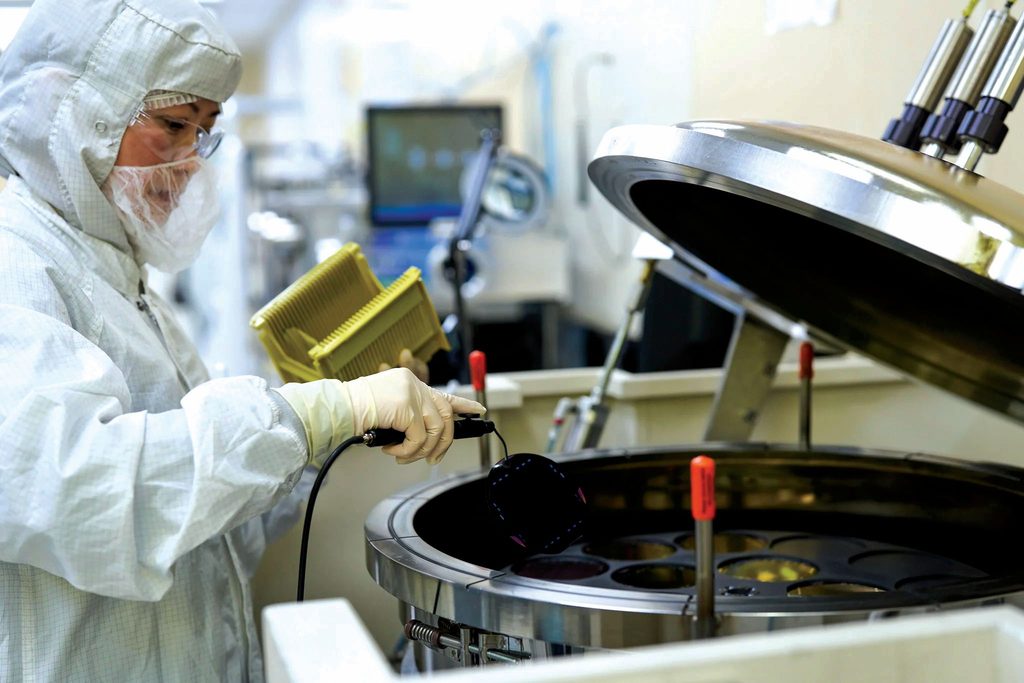
(Image: Rocket Lab)
US and New Zealand-based private space firm Rocket Lab has announced the production release of its Inverted Metamorphic (IMM) Apex, the latest model of its next-generation solar cell, writes Chris Young. The new solar cell features no germanium substrates, offering a critical supply chain advantage.
IMM Apex builds on the foundation of Rocket Lab’s IMM cell technology, which powered NASA’s Ingenuity Mars helicopter through a highly successful series of missions that proved controlled flight was possible on another planet.
This translates to a ‘Beginning of Life’ solar conversion efficiency of 31.5%, as well as 40% lower cell mass. According to Rocket Lab, it provides this “best-in-class specific power [watts per kilogram] while maintaining excellent radiation hardness and performance over temperature.”
Rocket Lab utilises an inverted growth architecture to manufacture IMM Apex. Layers are grown ‘upside down’ on a temporary substrate (typically gallium arsenide) rather than on a permanent germanium wafer. The temporary substrate is then removed, leaving only the active multi-junction semiconductor layers. This germanium-free process is advantageous because of the soaring costs of the mineral owing to surging demand for AI and satellites.
This also means IMM Apex can serve as a mechanical and electrical drop-in replacement for heritage solar cell products.
Rocket Lab has provided space-grade solar technology for critical space missions including NASA’s James Webb Space Telescope.
Its small-lift Electron rocket is a known quantity, but the firm is now working toward the launch of its medium-lift Neutron rocket, with which it aims to challenge SpaceX’s dominance of the medium-lift launch market.
UPCOMING EVENTS