
World’s first ‘air-breathing’ satellite could soon fly in VLEO
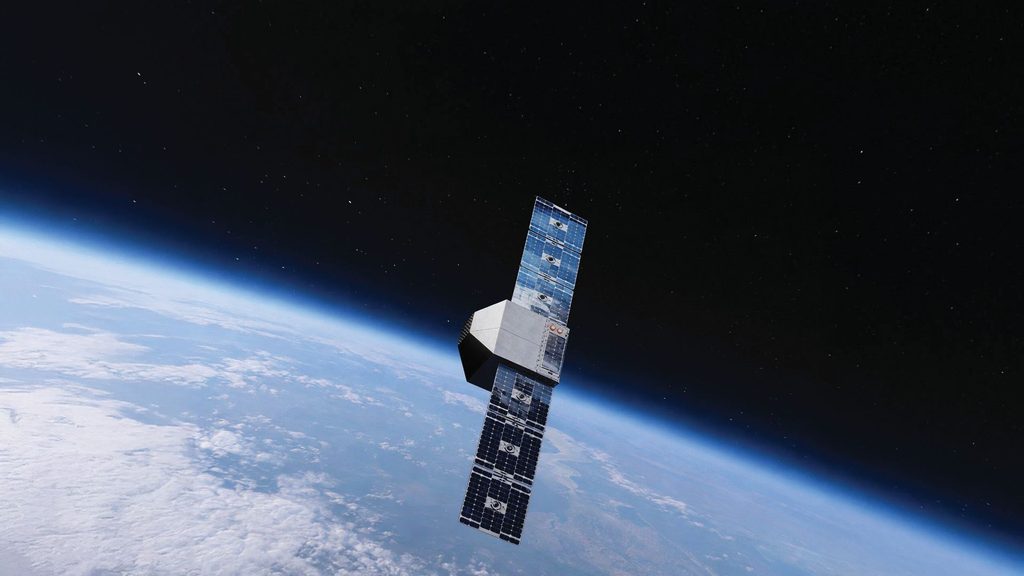
(Image: Kreios Space)
Spanish firm Kreios Space is set to become the first company to launch a satellite featuring an air-breathing electric propulsion (ABEP) system, writes Chris Young. Under a new agreement, the startup will test its technology aboard a microsatellite bus developed by Kongsberg NanoAvionics.
Kreios’ goal is to enable long-term operation of satellites in VLEO. Once in space, ABEP will allow these satellites to correct their orbits without fuel. The system uses a specialised intake scoop to absorb residual atmospheric air. The collected molecules are then ionised into plasma and accelerated by an inductive (or helicon) plasma thruster.
VLEO is roughly defined as any orbit ranging from 95 to 250 miles in altitude. As a point of reference, the Kármán Line, a metric used to define the boundary of space, is roughly 65 miles from Earth’s surface. The vast majority of satellites operate above 370 miles.
According to Kreios, VLEO operations can provide substantial benefits, including sharper images, higher-accuracy measurements, lower latency and improved link budgets.
“By enabling satellites to fly lower, longer and more efficiently, we are enabling higher-resolution Earth observation, much better satellite communications, more responsive and accurate missions and a more sustainable orbital infrastructure,” said Kreios Space’s CEO Adrián Senar.
UPCOMING EVENTS